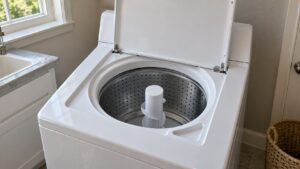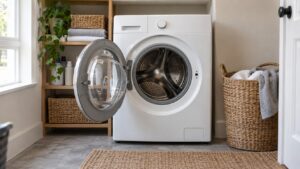
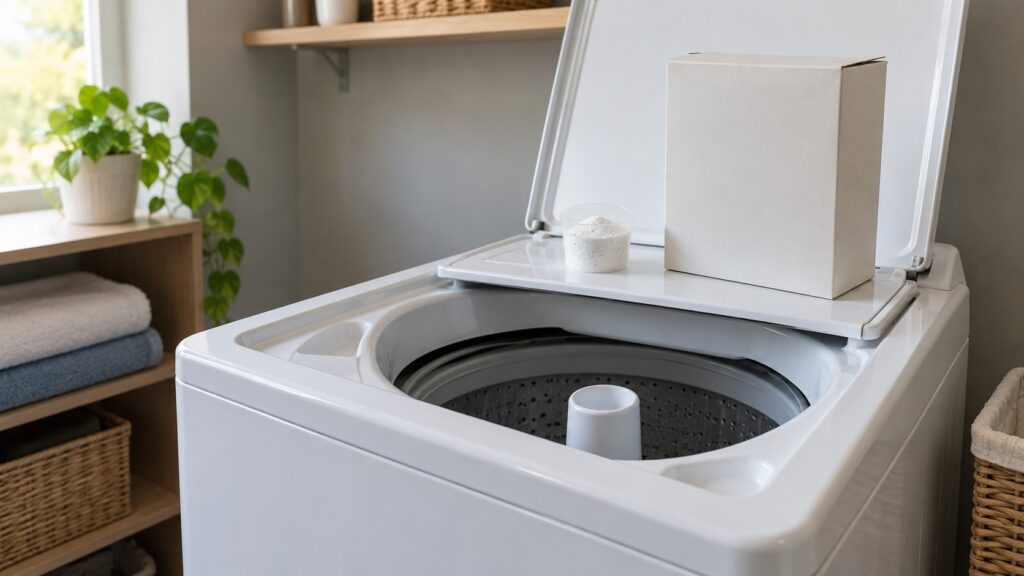
The right Amana washer detergent amount is a small dose of high-efficiency (HE) detergent, measured to the size of the load, not the old habit of a full cap. Amana NTW top-load and NFW front-load washers use little water, so extra detergent has nowhere to go: it forms suds the machine cannot rinse out. Our own guides name over-dosing as the single most common user mistake with these washers. We do not publish a dose in ounces or cap lines, because it depends on the detergent brand and on the load, so the label on your detergent and your owner’s manual give the exact amount.
How much detergent should you use in an Amana washer?
Use less than you think. Our guide to how an Amana HE washer works explains that these machines sense the load and use far less water than older washers, so only a small dose of HE detergent works properly. Our suds-error guide says the same thing from the other direction: the dose needed is much smaller than it looks like it should be. Start from the dose printed on the detergent bottle for a normal load in an HE machine, and scale it down for a small or lightly soiled load. If your clothes come out clean and smell neutral, you have it right. If they feel stiff, look dull or leave residue, you are using too much, not too little.
Whether your detergent is a liquid, a powder or a pod, the same logic holds. Check that the product says HE, and follow its own dosing instructions for your load size and water hardness. Our pages do not name a particular brand or a number, and we would rather say so than invent one.
Why does an HE washer need so little detergent?
Clothes clean by moving through water and detergent. On a top-load NTW the Dual Action Agitator does the moving; on a front-load NFW the drum tumbles the clothes. In both cases the water level is low, so the detergent is concentrated around the clothes. A concentrated dose is plenty. Add more and the extra does not clean better; it makes foam, and foam cushions the clothes, slows the wash action and blocks the spin from throwing water out. The control senses the foam and pauses, which is the suds error our Amana washer suds error guide covers.
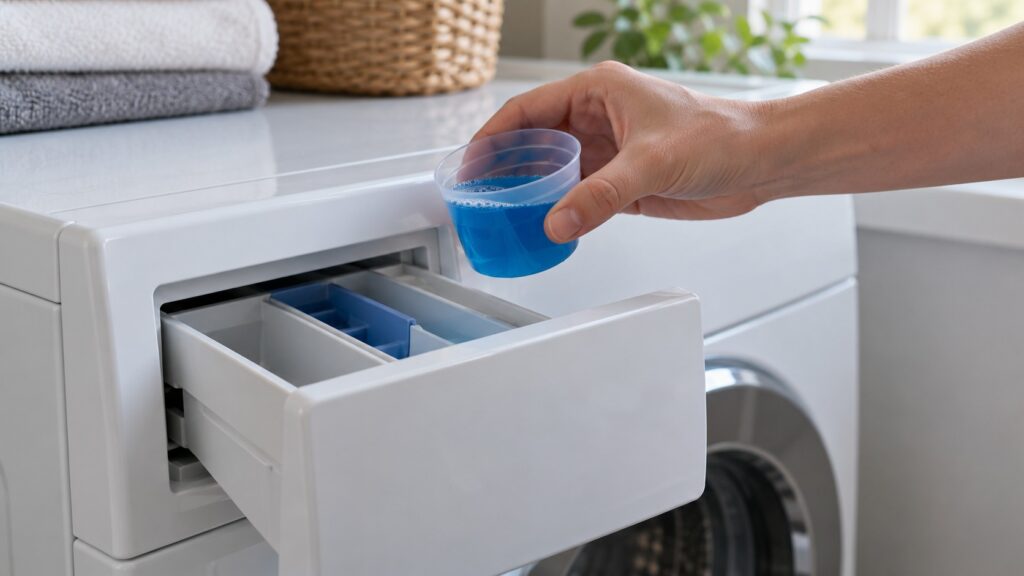
How do you tell you have used too much detergent?
- Foam or bubbles in the drum or at the door late in the cycle.
- A suds error on the display, or a cycle that pauses and runs extra rinses.
- Clothes that feel stiff or look dull, with detergent residue that has not rinsed out.
- A musty smell from the drum. Our Amana washer smells guide traces it to detergent residue plus trapped moisture feeding biofilm.
- Soap film in the dispenser or on the door seal of a front-load washer.
If you see two or three of these, cut the dose first, before you suspect a part.
What should you do after using too much detergent?
Run a Rinse and Spin cycle to flush the foam out, as our suds guide advises. Then check that the drain hose is not kinked and that the pump filter is clear so the suds can drain, and avoid packing the drum, since a full drum holds more foam. Do not add more detergent to compensate, and do not add fabric softener to a foamy drum. For the next wash, use less. If the suds error comes back with a small dose, the cause is not the dose, and a technician should look at the drain path and sensor.
What else changes how much detergent you need?
Load size matters most, then how soiled the clothes are. A lightly worn load needs less than a muddy one, and a half-full drum needs less than a full one, so the dose is not a fixed cap. Hard water can change how well detergent works, and a detergent’s own label usually says how to adjust. Check that you are not overloading the drum. Our Amana washer capacity guide explains why a packed drum cleans worse, because the load turns as one mass and the middle never sees fresh water. Also leave the lid or door open between washes so the drum dries, and run the monthly tub-clean cycle described in the Amana washer maintenance checklist.
When should you call a technician?
Call if suds keep appearing with a small, correct dose, if the washer will not drain or spin, or if water is leaking from the machine itself. Do not open panels to chase a drain or sensor problem; that is a technician’s job. If water reaches an outlet or the cord, switch off the breaker at the panel while standing on a dry floor and never pull a plug from a wet outlet. Our Amana washer repair page explains how a visit works.