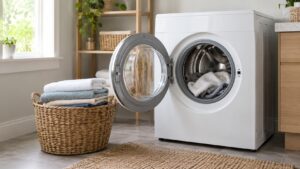
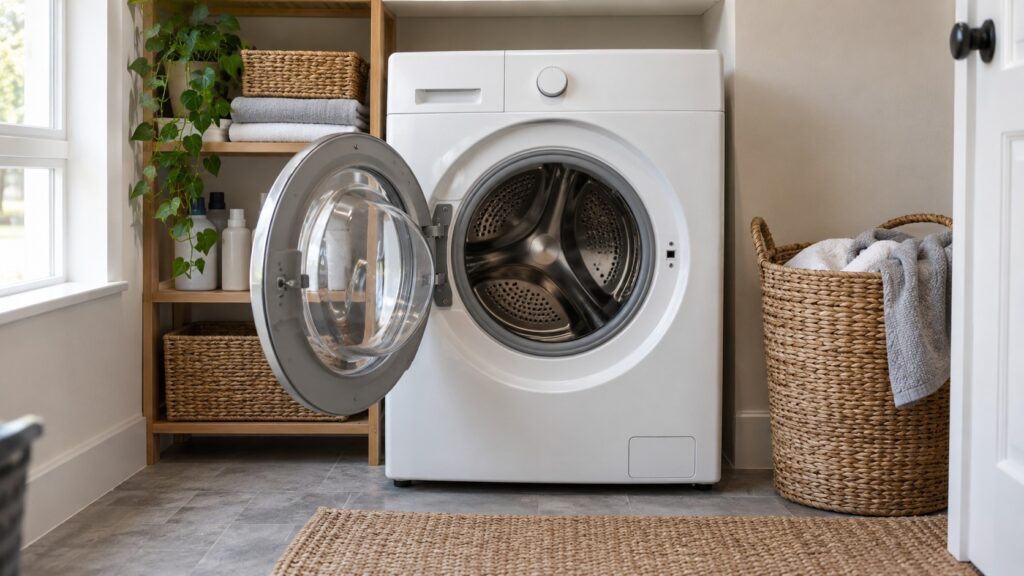
The Amana NFW7200TW is a white front-load washer with a stainless wash basket and a high-efficiency front-loading design. It is discontinued, so today it is a used or inherited machine, and the real question is whether one particular washer is in good shape. This guide gives you the model facts from our site, how it compares with the current NFW5800HW, and the checks that matter before you buy or decide to keep one.
What kind of washer is the Amana NFW7200TW?
It is a front-load washer, which means the drum is horizontal and you load it through a door in the front. Our model page lists a high-efficiency front-loading design, a stainless wash basket and multiple wash cycles, and it says the controls are electronic or dial depending on the model. Our page marks it as discontinued, no longer in production, so any machine you find is used or inherited.
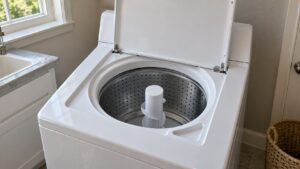
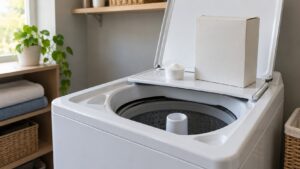
Amana’s front-load washers belong to the NFW family. Our Amana top-load vs front-load washer guide explains the trade-offs between the two designs: front-loaders use less water, spin faster and are gentler on fabrics, but cost more and need the door and the dispenser left open to dry.
How does the NFW7200TW compare with the NFW5800HW?
The NFW5800HW is the current front-load model on our site. Its page lists a 27-inch width, a white finish, a stainless steel wash basket, a door with a lock, detergent and softener dispensers, and multiple wash cycles and temperatures. The NFW7200TW page lists a similar core: a stainless basket, high-efficiency front-loading and multiple cycles.
The pages do not list a capacity for either model, so we do not compare drum size. If capacity matters, our Amana washer capacity guide explains how to think about it, including loading to about three quarters and leaving room for a flat hand between the load and the drum.
Is a discontinued washer a good idea?
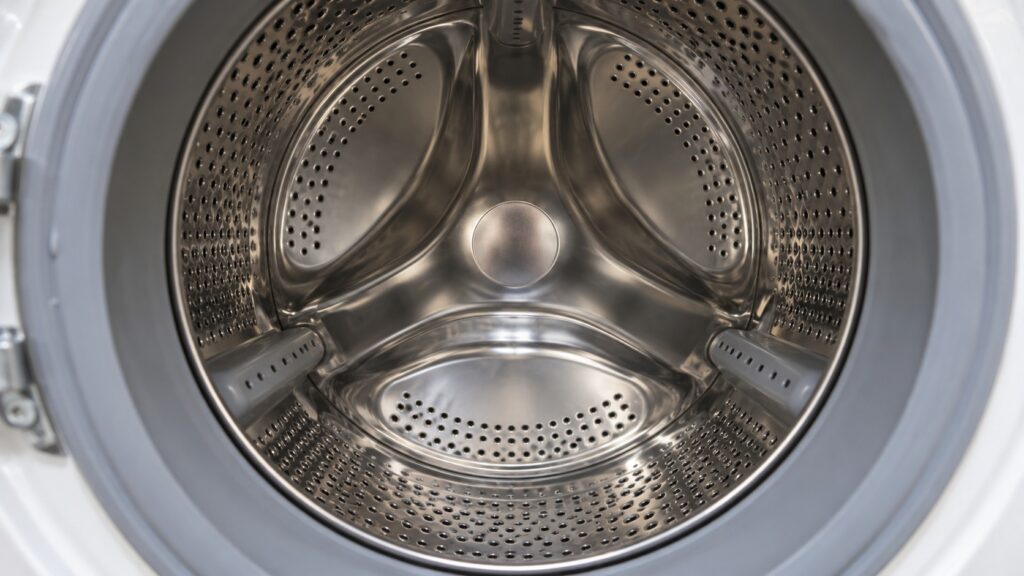
It can be, if the machine has been cared for. The risk with any discontinued washer is that some parts may be harder to get, and our model page says we still service it, with parts where they are available. That wording matters: availability varies. A used washer is also an unknown quantity, because you cannot see how it was treated. A clean drum, a quiet spin and a clean drain path are good signs, and rust, a growl in the spin or a damp, musty smell are warnings. Whether to buy it also depends on the price, and a repair only makes sense if the machine is otherwise sound.
What should you check before buying a used NFW7200TW?
- Run a full cycle if you can, and watch the fill, the wash, the drain and the spin.
- Look inside the drum and the door seal for rust, mold, hair or a musty smell. Front-loaders trap moisture, and our Amana washer smells guide explains why.
- Check that the door closes and locks. Our F22 page describes a door-lock failure on an older Amana front-load washer, so a door that will not lock is a red flag.
- Listen to the spin. A heavy rumble or a squeal is worth a closer look.
- Look for leaks under and around the machine after the cycle.
- Ask for the model number from the label so you know it is the NFW7200TW.
Our Amana washer F22 page lists the door-lock failure that we see on older front-loaders. Do not buy a machine that shows a door-lock or drain code unless you are prepared to repair it.
What problems do older front-load washers show?
The model page lists the faults we see most: a long fill, a long drain, door-lock failures, off-balance, suds and overload faults, and motor or drum faults. It also notes that LOC is the control lock, a feature rather than a problem, so a washer showing LOC is not broken. That distinction answers a common question from owners who see the word on a display and think the machine has failed. Check your owner’s manual for how to release the control lock.
Our Amana pages for the older front-load codes are F20 for a water inlet problem, F21 for a drain problem and the door-lock failure on the F22 page above.
How do you install and look after one?
A front-load washer needs the shipping bolts removed before the first cycle, braided stainless hoses, a proper drain and a level footing. Our Amana washer installation guide lists all of it, and how to level an Amana washer covers the part that stops a washer from walking. For upkeep, our Amana washer maintenance guide lists the care that keeps a front-loader trouble-free. Use only the small dose of high-efficiency detergent, because overdosing causes suds problems in a low-water machine.
Should you repair, replace or buy a different model?
If you already own an NFW7200TW that works, keeping it and looking after it is usually sensible. If it develops a fault, our Amana washer repair or replace guide helps you decide, and a technician visit gives you a firm diagnosis. If you are shopping from scratch and want a washer that is still in production, the NFW5800HW is the current front-load model on our site. See Amana washer repair for how a visit works.