An Amana dishwasher mounting bracket (or clip, depending on the model) holds the unit in its cabinet opening, and the exact hardware and the way it fastens depend on the model and on your countertop and cabinet. We do not publish a model-by-model bracket procedure on this site, so the steps differ by model and the installation sheet that came with your dishwasher is the authority. What this guide gives you is the general picture: why the dishwasher must be secured, what to check on a new or newly moved unit, and when to stop and bring in an installer.
Why does a dishwasher need to be secured?
A dishwasher is heavy and it is loaded through a door that folds down and carries the weight of full racks. If the unit is not fixed in its opening, it can slide forward, rock or tilt when you pull the door open and load it, and it can shift during a cycle. A secure unit also keeps the door seal and the float reading correctly. Our Amana dishwasher installation guide stresses a level cabinet so the door and the overfill float read correctly, and fixing the unit in place is part of the same job.
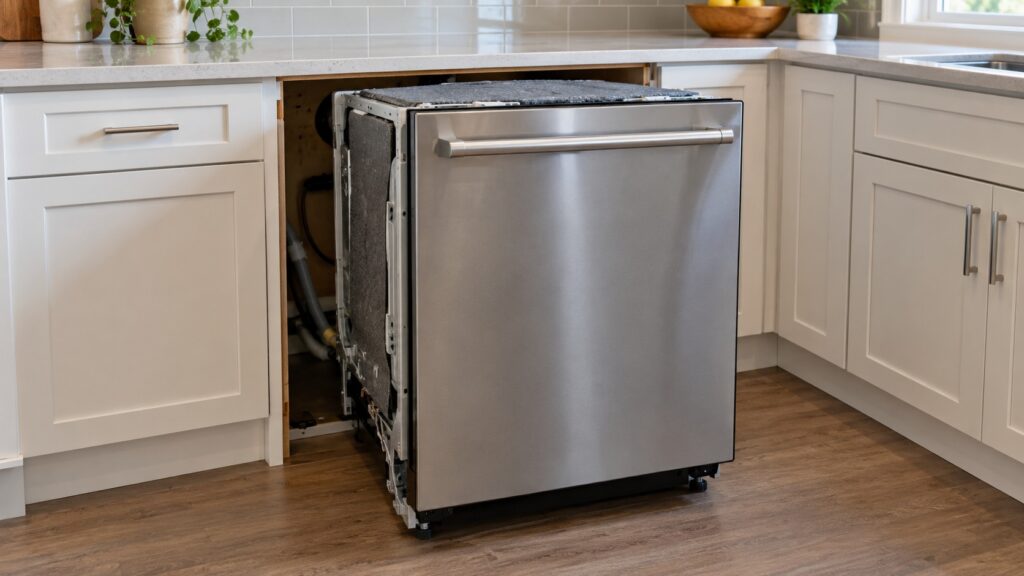
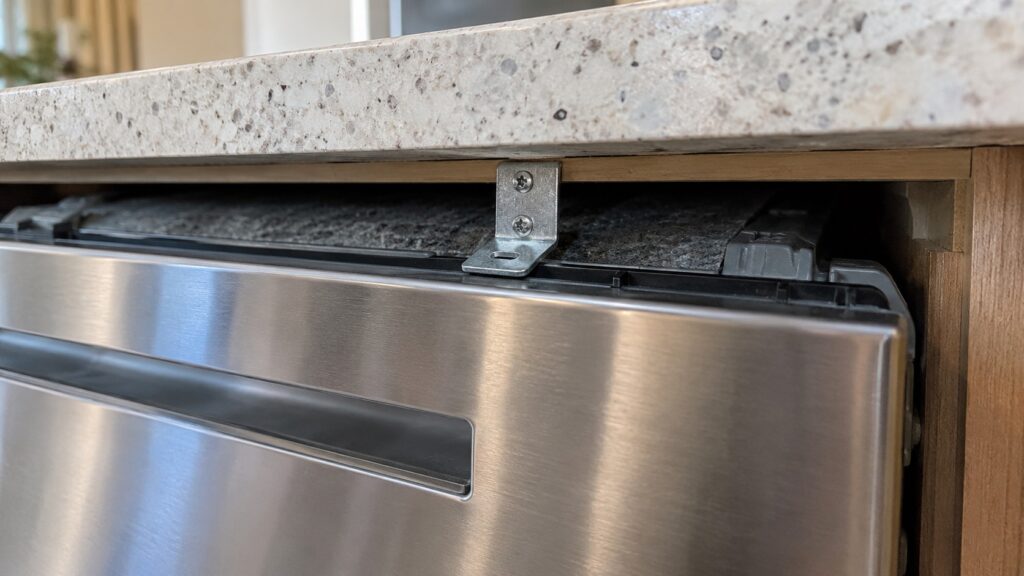
The brackets or clips are what hold it. They connect the dishwasher to the cabinet opening, and many installations use the underside of the countertop or the sides of the neighboring cabinets, depending on the model and the material. Your installation sheet shows where yours go.
What kinds of brackets and clips are there?
This depends on the model, so we will not name parts that we cannot confirm from our pages. Some dishwashers come with small metal brackets that fasten to the top frame of the unit, and others have tabs or clips built in. Which hardware is in the box and where it goes are described on the installation sheet. If the box is missing or the sheet is lost, look for your model number on the label inside the door and check the manual for your model before you buy parts. Do not use screws, brackets or clips from a different dishwasher, because the fit and the strength may not be right.
Countertop material matters too. Some countertops, such as stone, need an installer’s approach to fixing anything to their underside. If you have one of those, ask a professional.
What should you prepare before the installer arrives?
Gather the installation sheet and the owner’s manual for your model, and keep the hardware bag that came in the dishwasher’s box, because the brackets or clips are usually in it. Clear the cabinet opening and the floor in front of it. Note the model number from the label inside the door and the material of your countertop, since that decides how anything can be fixed to it. Turn the water supply under the sink off before the dishwasher is moved. Leave the power and plumbing connections to the installer, and do not remove any panel on the dishwasher to look for a fixing point. If any part of the installation sheet is unclear, ask the installer to explain it before the unit is pushed into place.
What does a full installation include?
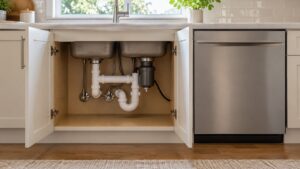
Securing the unit is one step in a longer list. Our installation guide says a clean Amana dishwasher installation needs a hot-water supply connection, a high drain loop or air gap to prevent backflow, the disposer knockout plug removed if sharing a disposer, a level cabinet and a leak test on the first cycle, and that skipping the knockout or the drain loop causes the most first-week problems. Read Amana dishwasher installation: water, drain and power for that checklist. The bracket step usually comes after the connections are made and the dishwasher is slid into position and leveled, but follow your installation sheet for the order.
Plumbing and power connections can be a job for a qualified installer, especially the electrical connection. Do not work on wiring yourself.
How do you check that it is secure?
You can check without taking anything apart. With the door closed, push gently on the top of the dishwasher and on each side. It should not shift or rock. Open the door and look at the gap between the dishwasher and the cabinets; it should be even. When you load the bottom rack, notice whether the front of the unit lifts or tilts. If anything moves, stop loading the door and have the installation checked.
Do not climb on or lean your weight on an open dishwasher door to test it, and do not pull on the unit. If you moved the dishwasher to clean behind it, it needs to be re-secured and re-leveled afterward.
What problems can a loose dishwasher cause?
A dishwasher that is not secured or level can leak at the door, trigger a leak or overfill fault, make noises during the wash and strain its hoses. Our Amana dishwasher won’t start or leaking guide says to confirm the unit is level so the float reads correctly, and the door latch must click for the dishwasher to start. A door that does not close flush can come from a unit that has shifted in its opening. If you see water on the floor, switch off the breaker at the panel while standing on a dry floor and never pull a plug from a wet outlet.
For drainage problems after installation, see Amana dishwasher won’t drain.
When should you call an installer or a technician?
Call if you do not have the installation sheet and are unsure what holds the unit, if the opening or countertop does not offer a secure fixing, if the dishwasher moves or tilts, or if you smell burning or see water near electrical parts. Do not try to improvise a fixing with glue, tape or foam. Tell the installer your model number from the label inside the door. Our Amana dishwasher repair page explains how a visit works, and our dishwasher maintenance checklist covers care after installation.