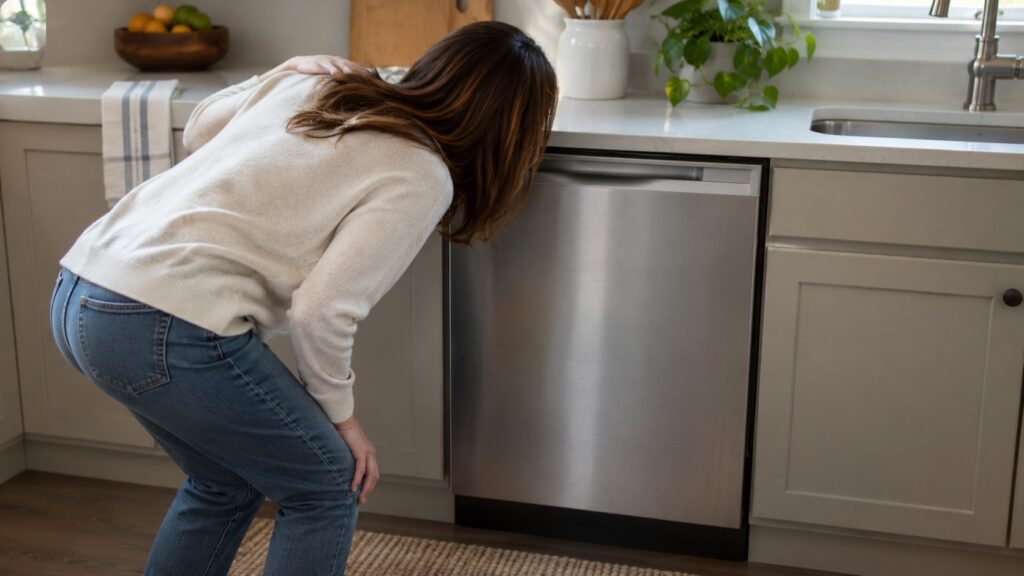
An Amana dishwasher humming noise usually means a motor or pump is trying to run and cannot, or is running with something in its way. Clicking is more often a switch, a latch or a valve working, and grinding often means something hard has reached the pump area. The useful clue is when the noise happens: at the start, while it fills, during the wash or while it drains. Stop the cycle, check the tub, the spray arms and the filter for stray items and call a technician if the noise continues.
Why is my Amana dishwasher humming?
A hum with no water moving points to a motor that is powered but not turning, or turning against resistance. In a dishwasher the pump that circulates and drains the water is driven by a motor, and a spoon, a piece of glass or a bone caught near the pump can stop it from turning freely. The motor then hums and strains. A hum while the dishwasher is draining, with water left in the tub, links to the drain path; our Amana dishwasher won’t drain guide lists the usual causes: a clogged Triple Filter Wash System, a kinked or blocked drain hose, a clogged air gap or disposer knockout and a jammed check valve.
A hum at the very start, with the cycle never really beginning, is a different problem from a hum during the wash. If the dishwasher does not begin a cycle, see Amana dishwasher won’t start.
What does a clicking noise mean?
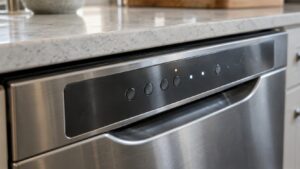
Several clicks are normal. A dishwasher clicks when the latch closes, when a valve opens or closes and when its control moves from one step to the next. What matters is a click that repeats, that comes with a cycle that will not progress, or that happens along with a hum. A repeating click with no cycle can be a latch, a control or a valve issue, and none of those is an owner repair.
Also check for the simplest cause. A utensil or a dish edge can touch a spray arm as it turns and tap against it, which sounds like clicking. Open the door during the wash only after the cycle has stopped, and watch whether the arms turn freely.
What does a grinding noise mean?
Grinding in a dishwasher is the sound of something hard being pushed around or ground against metal or plastic. The usual suspects are broken glass, a fruit pit, a bone, a bit of a utensil or a small piece of plastic that has fallen through the rack and reached the filter or the pump area. A cracked or loose spray arm that scrapes the rack can sound similar.
Stop the dishwasher if you hear grinding. Running it can damage the pump, the filter or the tub. Open the door, remove the racks and look at the floor of the tub.
What can you check yourself?
- Stop the cycle and open the door. Let the dishwasher cool if it was in a hot phase.
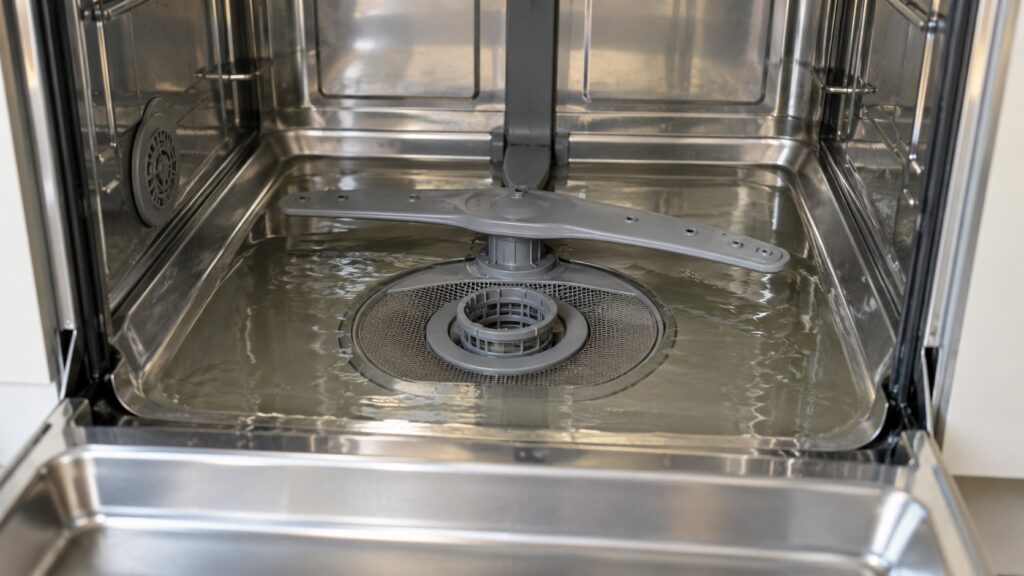
- Take out the lower rack and look at the tub floor for loose items, such as a spoon, a lid, a label or glass.
- Remove and rinse the Triple Filter Wash System at the tub floor, as our maintenance checklist advises doing monthly. Wear gloves if there may be broken glass.
- Check that the spray arms spin freely by hand and that nothing is pressing on them.
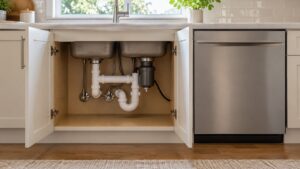
- Look at the drain hose only where it is visible under the sink and check that it is not kinked (do not pull the dishwasher out), and clean the air gap or confirm a disposer knockout plug was removed, as our drain guide describes.
- Run a short cycle empty and listen. Note when the noise happens.
Our Amana dishwasher maintenance checklist covers the filter and spray arm care that prevents many noises.
What should you not do?
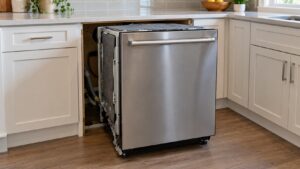
Do not take the lower panel off or reach into the pump area. The pump and motor are wired parts, and the sump can hold sharp debris. Do not run the dishwasher repeatedly while it grinds, and do not try to free a stuck pump with a tool. If water has reached an outlet, switch off the breaker at the panel while standing on a dry floor and never pull a plug from a wet outlet. If you smell burning, stop the dishwasher and switch the breaker off.
When is the noise a sign of a failing part?
If the dishwasher is clean, the tub is clear and the noise continues, a worn motor, a failing pump or a part that has loosened inside is the likelier cause. Humming that gets louder, a motor that does not start or noise from the lower part of the cabinet in every cycle all suggest this. If the dishwasher is old and has had several repairs, our Amana dishwasher repair or replace guide helps you decide. A technician can confirm which part it is before you decide.
When should you call a technician?
Call if the noise returns after the checks above, if the dishwasher will not drain or start, if you hear grinding from the bottom or if the humming continues. Tell the technician when the noise happens in the cycle and what you have checked. Our Amana dishwasher repair page explains how a visit works.