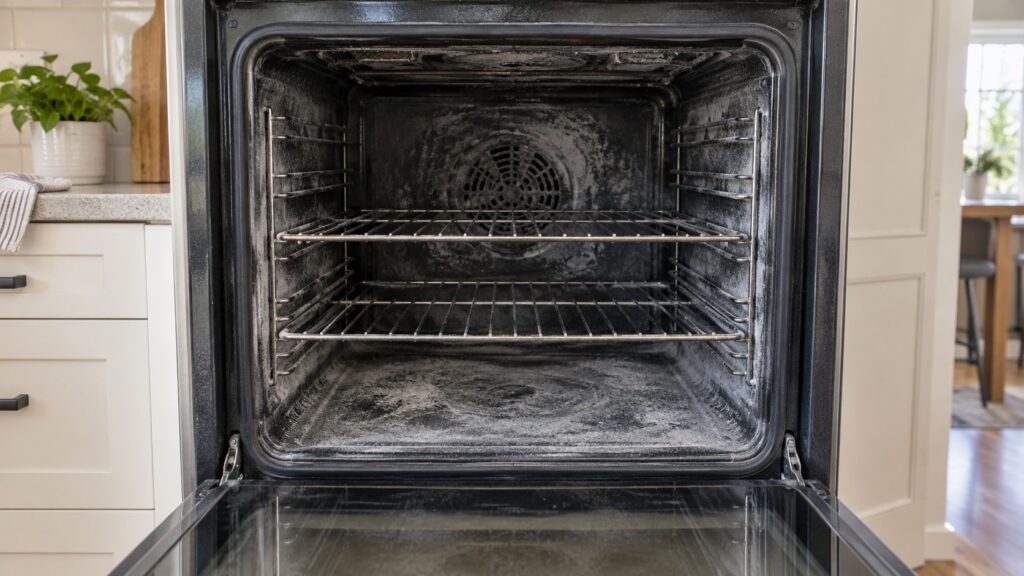
Amana oven self-clean maintenance mostly comes down to running the cycle before residue builds into a heavy baked-on layer, clearing loose debris first, and checking the door seal afterward — a self-clean cycle run on a badly neglected oven takes longer, produces more smoke and odor, and puts more stress on the door lock mechanism than the same cycle run on an oven cleaned regularly.
Why does prepping the oven before self-clean actually matter?
Loose debris and standing liquid spills left in the oven before a self-clean cycle can smoke heavily or even smolder under the extreme heat the cycle generates, since the cycle is designed to incinerate baked-on residue, not loose crumbs and liquid that were never given a chance to bake on in the first place. Wiping out anything loose first, and mopping up standing liquid, keeps the cycle focused on the actual caked-on grease and food residue it is meant to handle.
Should oven racks stay in during the cycle?
Check your specific model’s manual — many Amana ovens specify whether standard racks are rated for self-clean temperatures or should be removed beforehand, since not every rack finish tolerates the cycle’s extreme heat equally well. Racks not rated for the cycle can discolor or have their finish degrade if left in, which is a cosmetic issue rather than a safety one, but it is easy to avoid entirely by checking the manual once before your first cycle.
What actually happens to the residue during the cycle?
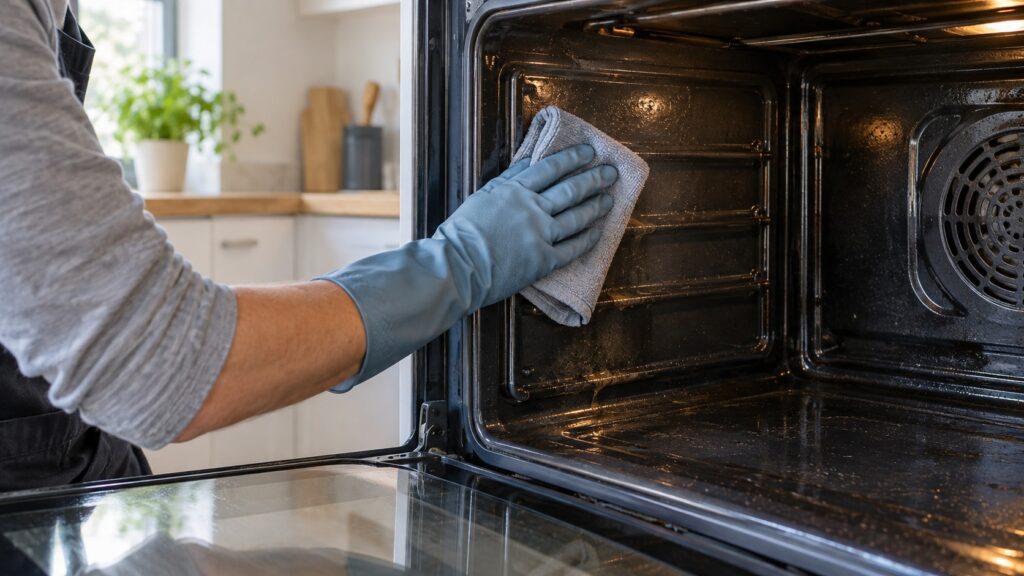
The self-clean cycle heats the oven interior well above normal cooking temperatures, hot enough to incinerate baked-on grease and food residue into a fine, powdery ash rather than requiring any scrubbing. Once the cycle finishes and the oven has cooled completely — this can take a few hours on some models, since the door stays locked until the interior drops to a safe temperature — that ash wipes out easily with a damp cloth, needing no chemical cleaner at all.
Why does the door lock during the cycle, and what if it won’t unlock afterward?
The door locks automatically once the cycle begins as a safety measure, since the interior reaches temperatures too high to safely open the door partway through, and it should release on its own once the interior has cooled to a safe range. A door that stays locked well beyond the expected cooldown time, or one that shows a locked indicator without ever having run a cycle, points at the door lock mechanism itself rather than anything about how the cycle was run — see our guide on an Amana oven door that won’t unlock if that happens.
How often should you actually run a self-clean cycle?
Every two to three months with regular cooking use keeps residue from accumulating into a heavy layer, though a household that bakes and roasts frequently, especially anything prone to boiling over, may benefit from running it slightly more often. Running the cycle proactively on a lighter, more frequent schedule produces less smoke and odor per cycle than waiting until the oven looks visibly dirty and running one heavy-duty cycle to catch up on months of buildup.
Does frequent self-clean use wear the oven out faster?
The cycle itself is designed to withstand its own extreme heat repeatedly, and normal use of the feature at a reasonable interval does not meaningfully shorten the oven’s service life. What does add wear is running the cycle on an oven that is already showing other issues — a struggling door seal or an already-strained lock mechanism — since the cycle’s heat and the locking sequence both put more demand on parts that are already compromised than they would on a healthy oven. Our broader Amana oven tips cover other habits that reduce everyday wear alongside a sensible self-clean schedule.
What should you check on the door seal after running self-clean?
The extreme heat of a self-clean cycle is the single hardest stress most oven door seals experience, so checking the seal for cracking, flattening, or gaps immediately after a cycle is a good habit — a seal that has started to fail lets heat escape during normal baking, not just during self-clean, and it is a straightforward, inexpensive part to replace once caught early rather than left until baking performance itself suffers. Run your fingers gently along the full length of the gasket while it’s cool, feeling for stiff or brittle sections rather than relying on a visual check alone, since a seal can look intact while having lost the flexibility that actually makes it seal properly against the door frame.
Is it normal for a self-clean cycle to produce a strong smell?
A light smell during the first two or three self-clean cycles on a new oven is normal, since the cycle is also burning off manufacturing residue and protective coatings that a brand-new oven still carries. Beyond that early period, a strong or ongoing smell during self-clean points at unprepped debris — a spill or grease buildup that was not wiped out beforehand — rather than anything wrong with the cycle itself. If the smell is sharp or chemical rather than a smoky food smell, stop the cycle and ventilate the kitchen, then check for anything accidentally left in the oven before running it again.
Does the type of spill inside the oven change how you should prep for self-clean?
Greasy, oily residue and sugary spills behave differently under self-clean heat, and it’s worth treating them differently before running the cycle. Sugary spills — a boiled-over pie filling, a dropped marshmallow — can bubble and spread further across the oven floor as they heat, so wiping those up as fully as possible beforehand keeps the mess contained rather than letting the cycle spread a sticky spill over a wider area before incinerating it. Greasy residue is generally less mobile under heat and burns down cleanly in place, so it needs less pre-cleaning attention than a sugary spill does, though removing large greasy chunks by hand still reduces smoke during the cycle either way.
We are an independent repair company, not a factory service arm, and we will tell you when a repair is not worth doing. Pricing starts from a diagnostic visit and we confirm the estimate before any work begins. If your oven’s door lock or seal needs attention after a self-clean cycle, our Amana oven repair service can take a look — you can schedule a visit online.