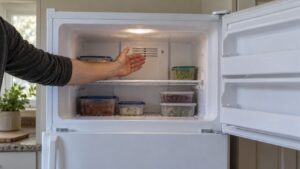
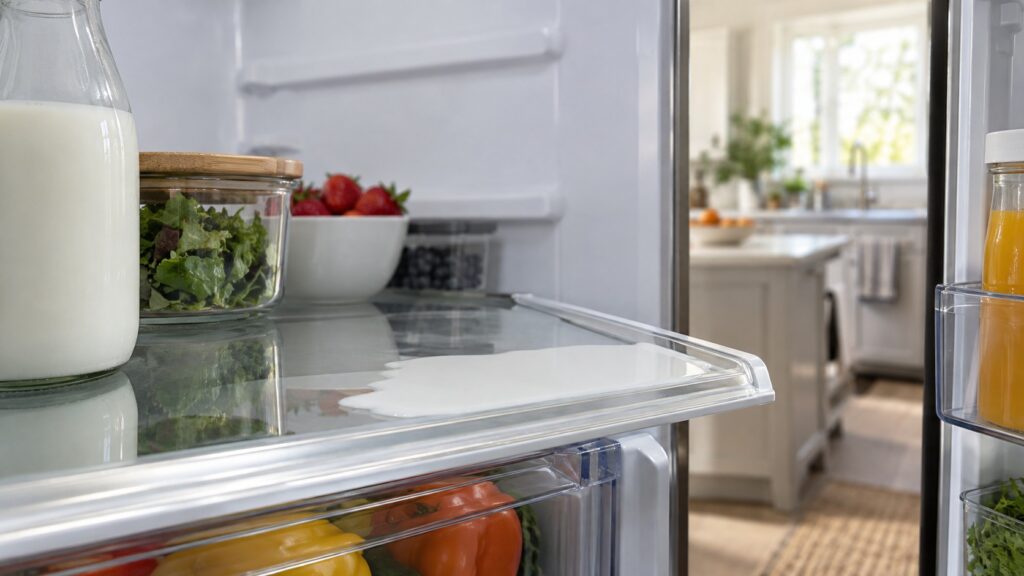
Amana SpillSaver is the name for the shelf design that contains a spill instead of letting it run. Each shelf has a raised edge and a sealed surface, so a knocked-over carton stays on the shelf it was on rather than draining through every level below it. It sounds like a small thing and it is the difference between a five-minute wipe and taking the refrigerator apart.
What the design is actually doing
An ordinary refrigerator shelf is a piece of glass sitting in a frame with a gap around it. Liquid finds that gap immediately and goes down. A SpillSaver shelf closes the gap with a seal and adds a lip at the edge, so the shelf becomes a very shallow tray.
That is the whole mechanism, and its limits follow directly. It holds what a shallow tray holds. A tipped milk carton is comfortably within that; a gallon jug on its side is not, and will go over the lip. The design buys you time and containment, not immunity.

Why a contained spill matters so much
A spill that gets past the shelves does not stop at the bottom of the compartment. It runs under the crisper drawers, into the channels the drawers slide in, and frequently into the air duct that circulates cold air between compartments. Sugar in that duct becomes a smell that no amount of wiping the visible surfaces will fix, because the source is somewhere you cannot see.
That is the scenario SpillSaver exists to prevent, and it is why we treat a report of a persistent refrigerator odor as a spill history question first. Our guide on refrigerator maintenance covers cleaning the places a spill reaches.
Cleaning the shelves without wrecking the seal
- Let the glass come to room temperature before washing. Cold tempered glass meeting hot water is thermal shock, and tempered glass fails all at once rather than cracking politely.
- Wash in place where you can. A spill contained on the shelf can be lifted with a cloth without removing anything.
- Do not pry the glass out of the frame. That is exactly how the seal is destroyed, and the shelf never contains anything again.
- Nothing abrasive on the frame, and no solvents near the seal.
When the shelf stops working
A SpillSaver shelf that no longer contains has almost always had its seal compromised — perished with age, or separated when someone lifted the glass out to clean under it. The symptom is simple: a spill that used to stay put now runs. Shelves are replaceable parts, and on a refrigerator that is otherwise sound it is worth doing, because the alternative is the duct and the drawer channels described above.
Cracked glass is the other case, and it is not repairable. Tempered glass with a chip at the edge will eventually fail completely, usually at an inconvenient moment, so a chipped shelf is worth replacing before it does.
Adjustable, sliding and fixed: which you have
Not every shelf in a refrigerator is the same kind of shelf, and the differences matter when you are rearranging. A fully adjustable shelf lifts out and drops into any of several positions on the rails, which is what lets a tall bottle live inside rather than in the door. A sliding or split shelf has a front section that slides back under the rear one, so a tall item can stand on the shelf below without removing anything.
The containment works the same on all of them, but the sliding types have more joints and therefore more places for a spill to find a way through if the mechanism is dirty. Clean the runners when you clean the glass, and make sure a sliding section is pushed fully home rather than left half open — a half-open slide is a gap at exactly the point liquid will reach.
Weight, and the thing shelves are not for
A tempered glass shelf carries a great deal of weight spread evenly and much less concentrated in one spot. A heavy stock pot set down hard on one corner is the load that chips an edge, and a chipped edge is the beginning of an eventual failure. Slide heavy items on rather than dropping them, and keep the heaviest ones near the rails rather than in the middle of the span.
The other thing a shelf is not for is leaning. A door left open with someone resting a forearm on a shelf edge puts a load on the frame that it was not designed to take, and it is a common way that a frame distorts just enough to break the seal.
Using the feature properly
The design rewards a little thought about what goes where. Put the things most likely to leak — opened cartons, marinating meat, anything in a container with a doubtful lid — on a SpillSaver shelf rather than in a door bin, where there is no containment at all. Keep the heaviest, most stable items low and the tippy ones where a spill will be caught.
And keep something absorbent nearby. A contained spill still has to be lifted, and doing it promptly is what keeps the seal clean and the odor out of the compartment. Our organization guide covers the rest of the layout.
Related terms you will meet
Amana uses several names for features in the same compartment, and they are easy to confuse. The crisper drawers and their humidity controls are a separate system — see our crisper glossary. The water filter that affects ice and dispensed water is another — see the filter glossary. None of them interact with the shelves, so a fault in one says nothing about the others.
When to call
Shelves are parts rather than service calls. What does warrant a visit is a persistent odor that survives a thorough clean, water pooling in the base of the compartment, or frost forming where it did not before — all of which can follow a spill that reached the duct.
We are an independent repair company, not a factory service arm. Pricing starts from a diagnostic visit and we confirm the estimate before any work begins. Amana refrigerator repair covers the sealed system, the defrost circuit and the ducting, and you can schedule a visit online.