An Amana refrigerator fan motor that stops working leaves the refrigerator warm in a way that can be hard to read, because the compressor may run happily while the cold air goes nowhere. Amana refrigerators carry two kinds of fan: the evaporator fan, which moves cold air from the freezer into both compartments, and the condenser fan, which cools the compressor and the coils at the back or bottom. Each fails in its own way, and the symptoms point to which one. This guide helps you tell them apart, run the safe checks and know when to call.
What do the fans in an Amana refrigerator do?
A refrigerator makes cold at the evaporator coil in the freezer, and it only reaches the food if air moves. The evaporator fan pulls air across the cold coil and pushes it through ducts into the freezer and, by way of a damper, into the fresh-food section. If the fan stops, the coil stays cold and may frost over, but the air stays put. The freezer may hold for a while, and the fresh-food side warms.
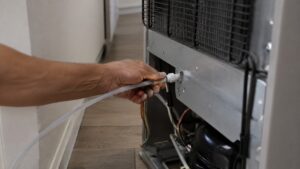
The condenser fan sits near the compressor and pulls room air across the condenser coil to carry away heat. If it stops, the coil cannot shed heat, so the compressor runs hotter and longer, the refrigerator gets less efficient and the cabinet warms slowly. Not every Amana refrigerator has a condenser fan that is easy to see, but most have both kinds of fan.
How do you tell a failed evaporator fan?
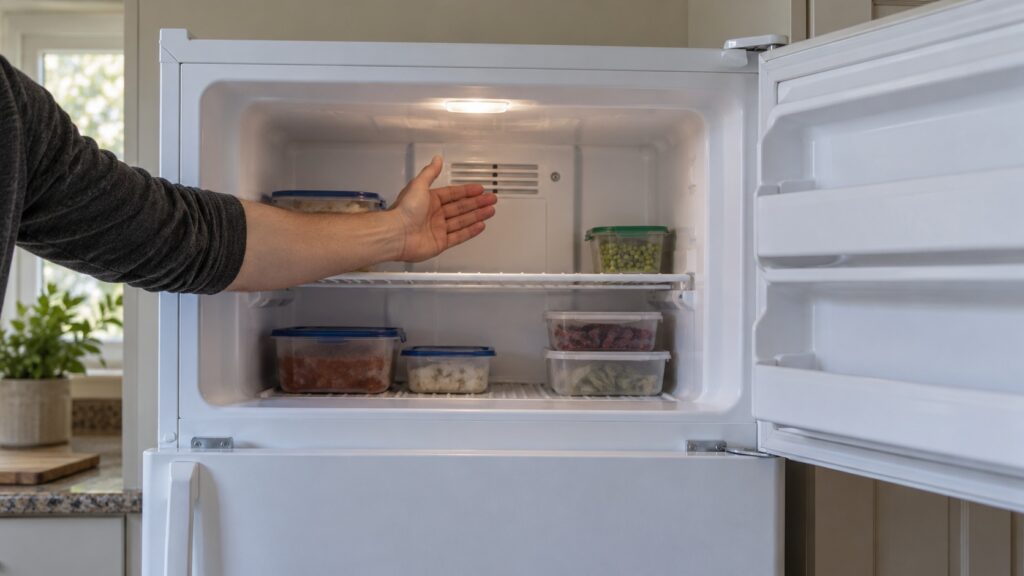
The classic sign is a freezer that is cold with a fresh-food section that is warm. Another is a refrigerator that makes a new noise, such as a chirp, a buzz or a rattle from the freezer, or one that has gone suddenly silent. Open the freezer door, then press and hold the door switch, if you can find it, while you listen at the back wall. The evaporator fan normally runs when the door is closed, and the switch stops it when the door is open, so you should hear a soft whoosh when you hold the switch in. A fan that does not run, or that scrapes, is suspect. Our freezer cold but fridge warm guide covers this symptom in full.
Look for ice around the fan area. Frost that blocks the fan blades usually points to a defrost problem, not a motor fault, since a failed defrost heater lets ice grow until it jams the fan. Replacing the motor alone will not fix that, because the ice will return, and our frost buildup guide explains how to separate them.
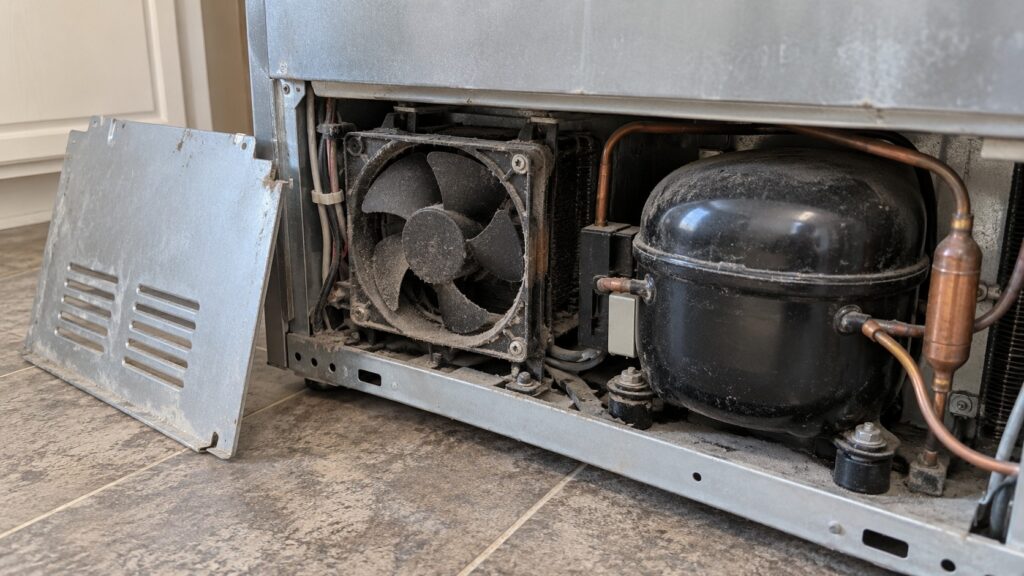
How do you tell a failed condenser fan?
A condenser fan problem shows up as a refrigerator that runs and runs without catching up, a warm cabinet and a compressor area that feels very hot. You will not usually see the fan without opening a rear or lower panel, so start by listening. With the refrigerator running, a healthy condenser fan hums softly. Silence near the compressor while the unit is clearly running, or a loud buzzing and scraping, points at the fan. First, unplug the refrigerator and check the area for dust and pet hair, because a matted coil and a clogged fan area cause the same symptoms. Our guide to cleaning Amana condenser coils shows how, and the running constantly guide covers the related symptom.
What can you safely check yourself?
Start with the safest checks. Set the temperature controls to normal, and make sure no food is blocking the vents inside the freezer and the fresh-food section, since blocked vents mimic a fan fault. Listen at the back of the freezer for the evaporator fan, using the door switch trick above. Unplug the refrigerator and vacuum the condenser coils and the area around the condenser fan, then plug it back in and wait several hours to see if the temperatures recover. Check the door gaskets too. Do not remove panels that need tools, and do not put your fingers near the blades.
What does not make sense to try?
Do not spin a fan blade by hand while the refrigerator is plugged in, do not pour hot water into the freezer to melt a jam, and do not scrape ice off the evaporator with a sharp tool, since the tubing is thin and a puncture means a sealed-system repair. If the freezer is full of food and the fan has failed, move the food to a cooler or another freezer while you wait for service, because the freezer will warm.
When is the fan the problem, and when is it something else?
Several faults can look like a fan failure. A bad defrost heater, a defrost thermostat or the control board can starve the fresh-food section in the same way. A blocked air damper can also stop cold air from reaching the fresh-food side. A technician tests the fan motor with a meter, spins the blade and checks the voltage at the connector before replacing it, and then checks the defrost circuit to make sure the cause is not upstream. The general overview of not cooling problems is in our Amana refrigerator not cooling guide.
We are an independent repair company, not the manufacturer, and we will tell you plainly if a repair is not worth doing. Our Amana refrigerator repair service can test both fans and the defrost circuit, and you can book a visit online.