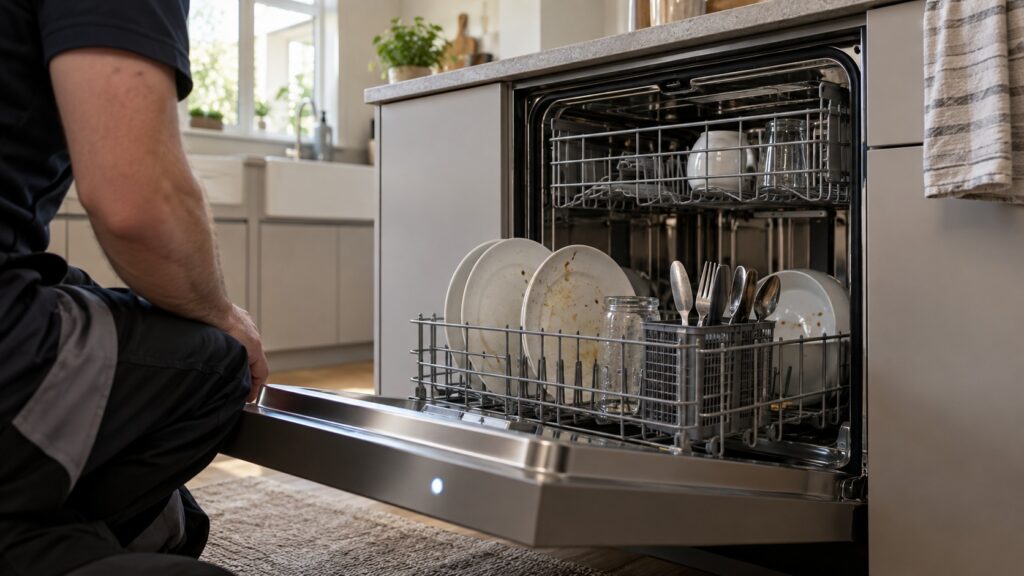
An Amana dishwasher flow meter or wash motor failure shows as F7E1: the control is not getting the water-flow or wash-pump feedback it expects, so it stops the cycle. Clean the filter, check the spray arms, switch power off at the breaker for 30 to 60 seconds and restart; if the code returns, a technician needs to test the flow meter and the wash motor. Our Amana dishwasher F7E1 error page has the reference listing, and this guide explains what is happening and what to do.
What does F7E1 mean on an Amana dishwasher?
A dishwasher keeps track of its own water movement. The wash motor spins the pump that pushes water to the spray arms, and a flow meter counts that water, so the control knows the wash is working. When the control commands a wash but gets no flow signal or no pump feedback, it concludes that something in this loop has failed and raises F7E1. The cause could be the flow meter itself, the wash motor, a jammed impeller, or a wiring or control failure that loses the signal. The dishwasher stops rather than run a wash it cannot confirm.
On models without a display, the code appears as a pattern of flashes on the Clean light, so a blinking light is often the only sign. Another code from the same family of controls is covered in our Amana dishwasher F2E2 guide.
What symptoms come with F7E1?
A wash problem is shown, or the Clean light flashes the pattern. Dishes come out poorly cleaned or dirty. The wash motor may be quiet, which suggests it is not running, or noisy, which suggests it is struggling. The cycle may stall partway. If dishes come out dirty but there is no code, the cause is more likely a clogged filter or blocked spray arms; our Amana dishwasher not cleaning guide covers that case.
What can you safely check yourself?
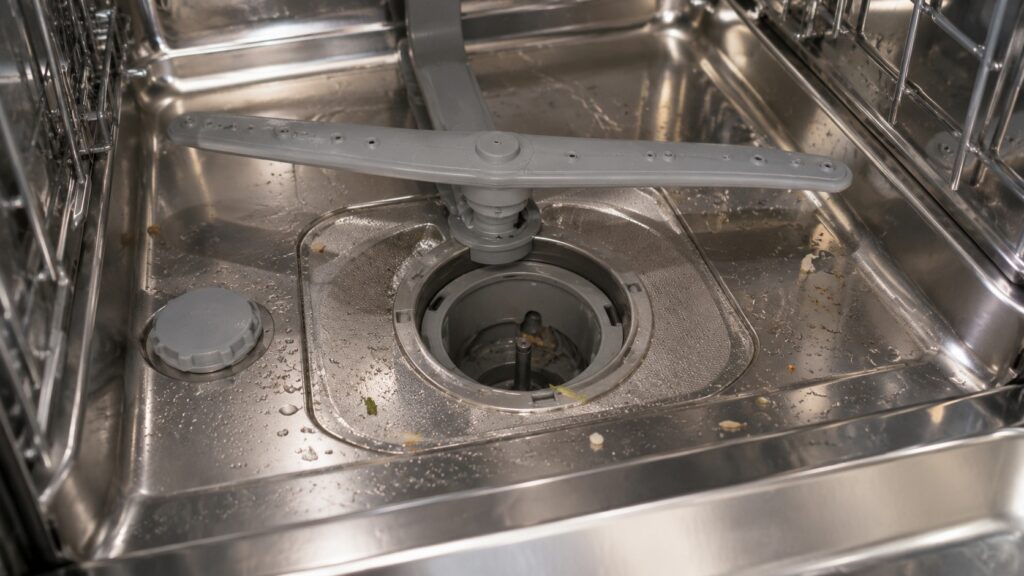
Three things, all outside the electrical parts. First, clean the filter: remove the lower rack, lift out the filter, rinse it and look into the sump for debris such as glass shards, bits of bone, toothpicks or labels. Second, check the spray arms: spin each by hand and look at the holes for blockages. Third, turn the dishwasher off at the circuit breaker for 30 to 60 seconds, restore power and run a short cycle. Listen to the pump: it should sound steady and smooth. Stop there. Anything beyond this means opening panels near mains voltage and water, which is not something to try without training.
If the dishwasher also shows signs of not draining or not filling, those are different faults with their own causes. Read dishwasher will not drain and dishwasher F6E1 not filling to tell them apart.
What causes the flow or pump feedback to go missing?
Four things, from the most to the least common in a home. Debris in the sump or around the impeller blocks the pump so it cannot move water, and the control sees no flow. A worn wash motor turns too slowly or stops. A flow meter that has failed reports nothing even though water is moving. Finally, wiring or a connector between these parts and the control can corrode or loosen, especially in a machine that sits in a damp cabinet. Hard water scale, a leaking door seal and years of vibration all add to the wear. The first of these is the one an owner can influence, by scraping dishes, keeping the filter clean and not letting small hard items reach the sump.
Anything that rattles in the pump area is a clue. A technician will often hear the difference between a motor that hums against a jam and a motor that is silent.
What does the technician test?
Usually in this order: the debris check at the impeller, the wash motor and its winding, the flow meter and its connector, and then the wiring and control board. A blocked impeller is the best case, because removing the obstruction fixes it. A failed wash motor or pump assembly is a bigger repair. A faulty flow meter is a smaller part but needs correct diagnosis, since the symptom can look like a motor fault. Replacing the control board without checking these parts first is an expensive way to be wrong, which is why a measured diagnosis matters.
Because F7E1 is rated high severity, do not keep restarting the dishwasher in the hope it clears. Running it with a failed wash circuit can leave water standing in the tub and can overheat a struggling motor.
Is it worth repairing an older Amana dishwasher for F7E1?
Often, yes, if the rest of the machine is sound. A flow meter or impeller problem on a dishwasher that cleans well otherwise is a good repair. A failed wash motor on a dishwasher with rust, leaks and a worn door is a harder decision. Our Amana dishwasher repair or replace guide sets out how to weigh it, and the dishwasher maintenance guide shows how to keep the filter and sump clear to prevent a repeat. We are an independent repair company, not the manufacturer, and we will say if a repair does not pay off.
Our Amana dishwasher repair service can test the flow meter and wash motor, and you can schedule a visit online.