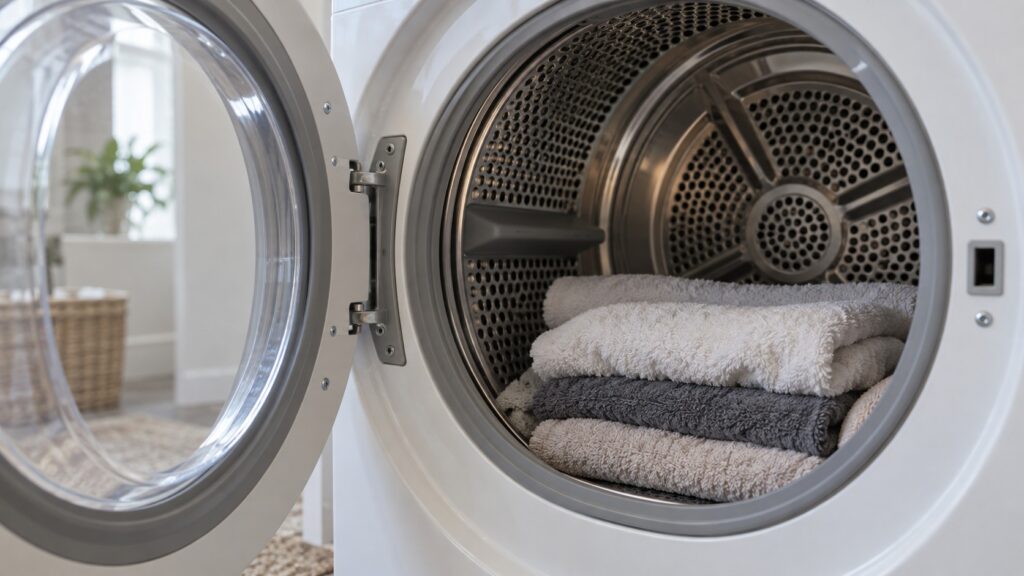
Amana AutoDry is a moisture-sensing dry system on select Amana dryers that ends a cycle once the load actually reaches the selected dryness level, rather than running a fixed timer regardless of how damp the clothes still are. Getting the most from it means keeping the sensor clean and giving it a load it can actually read accurately — dryer sheet residue and an overloaded drum are the two most common reasons it stops behaving the way it should.
What is the single habit that keeps AutoDry accurate?
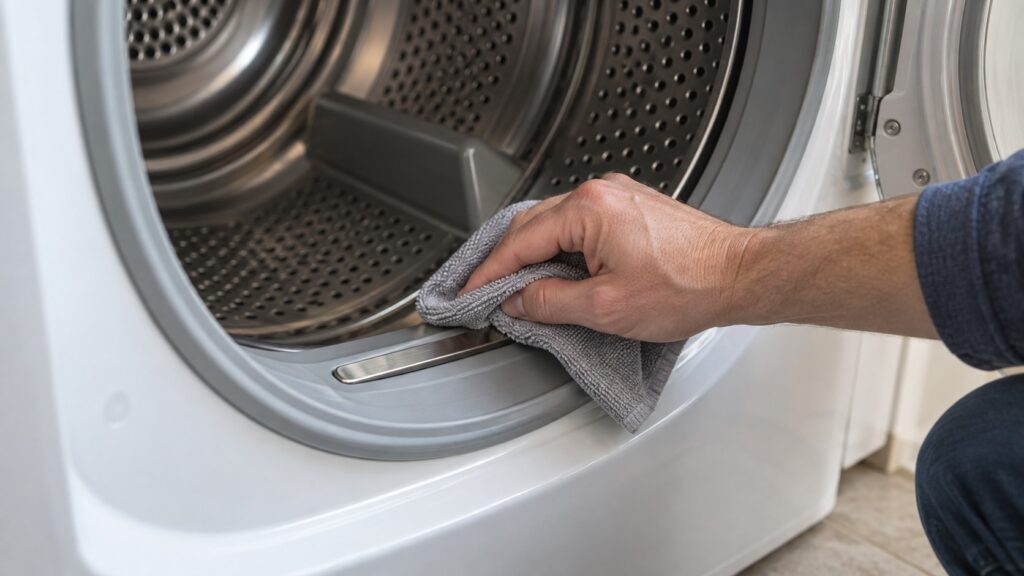
Clean the two small metal sensor strips inside the drum every few months with a cloth lightly dampened with rubbing alcohol — fabric softener sheets leave a residue on contact that insulates the strips and stops them from reading moisture correctly over time. This single habit does more to keep AutoDry working accurately than anything else you can do, since a dirty sensor is by far the most common reason cycles start running inconsistently.
Does load size actually affect how well AutoDry performs?
Yes — an overloaded drum prevents fabric from tumbling freely past the sensor strips consistently, which can make the sensor’s readings less reliable regardless of how clean the strips are, since some parts of the load may never make good contact with the sensor at all. Loading the drum to roughly three-quarters full, leaving room for items to tumble and rotate freely, gives the sensor a fair and representative read of the whole load rather than just the portion that happens to brush past it.
Why does the dryness level setting matter more than people expect?
Most Amana dryers with this feature offer a few dryness level options — more damp for ironing, fully dry for storage — and picking the wrong one for your actual needs can make it seem like the sensor is inaccurate when it is actually just following a setting that doesn’t match what you wanted. If clothes consistently come out slightly damper than you’d like, check the dryness level setting before assuming the sensor itself has drifted out of calibration.
Can a long or restricted vent run make AutoDry seem broken?
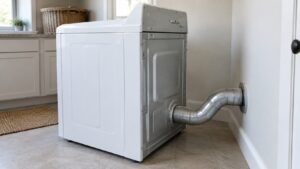
Yes, indirectly — a restricted exhaust vent traps warm, humid air inside the drum longer than it should stay there, and the sensor reads that trapped humidity as the load still being damp even after the fabric itself is dry. If cycles have gradually grown longer over months, check the exhaust vent for lint buildup before assuming the sensor has failed, since airflow problems produce nearly identical symptoms to a genuine sensor fault.
What should you do if a clean sensor still gives inconsistent results?
If cleaning the sensor and confirming the vent is clear does not restore consistent drying, and the dryer heats normally on a manual timed cycle, the fault has likely moved to the sensor’s wiring or the control board reading it — that is a proper diagnostic matter rather than something to keep testing with more loads of laundry. Our guide on an Amana dryer that takes too long to dry covers the broader troubleshooting steps once basic sensor and vent checks are ruled out.
Does using AutoDry regularly change what other maintenance you should do?
Not fundamentally — the lint filter and exhaust vent still need the same regular cleaning any dryer needs regardless of whether it uses moisture sensing or a fixed timer, covered in our Amana dryer drying tips. What changes is that a dirty vent shows up as a symptom sooner and more noticeably on a sensing dryer, since the sensor reacts to trapped humidity in a way a fixed timer simply does not respond to at all.
Does fabric type or load mix affect how well AutoDry reads a load?
Yes — a load mixing heavy items like towels with light synthetic fabrics gives the sensor an uneven picture, since the heavier fabric holds moisture longer and the lighter items dry out well before it does. Depending on exactly where the sensor happens to make contact as the load tumbles, the cycle can end while one part of the load is still noticeably damp. Separating heavy and light fabrics into their own loads, rather than mixing them out of convenience, gives the sensor a more uniform load to read and produces more consistent results across the whole load rather than a compromise between two very different drying times.
Is it ever better to skip AutoDry and use a timed cycle instead?
For very small loads — a single towel, one delicate item — a timed cycle can actually be more predictable than AutoDry, since a small item may not make consistent contact with the sensor strips at all as it tumbles, leading to a cycle that runs longer than necessary while waiting for a reading that never firms up. For anything close to a normal, well-balanced load, AutoDry’s adaptive approach outperforms a fixed timer specifically because it responds to how that particular load is actually drying rather than assuming every load behaves the same way. Knowing when each approach suits the situation better is part of getting good, consistent results rather than defaulting to one setting for everything you dry.
What is the quickest way to tell the sensor is finally due for cleaning?
If cycles that used to finish in a predictable range have quietly crept longer over the past few weeks, without any change in what you’re washing or how full the loads are, that gradual drift is the clearest early sign the sensor strips need attention before you even get to the point of visibly damp clothes at the end of a cycle. Catching that drift early and cleaning the strips right away is a far smaller task than waiting until the dryer is consistently running its longest available cycle on every load regardless of size.
We are an independent repair company, not a factory service arm, and we will tell you when a repair is not worth doing. Pricing starts from a diagnostic visit and we confirm the estimate before any work begins. If your dryer’s cycles have stopped matching your loads, our Amana dryer repair service can test the sensor, the vent, and the heating circuit — you can schedule a visit online.