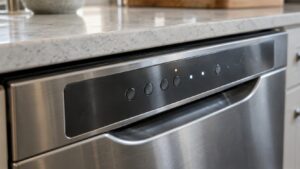
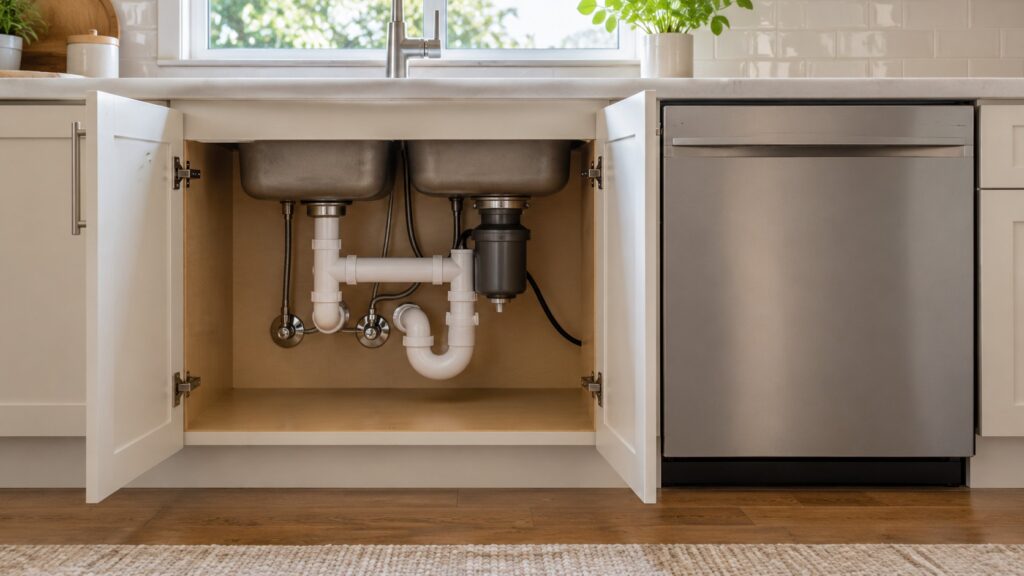
The water supply line is the connection that brings hot water to an Amana dishwasher, and most first-week problems with a new dishwasher trace back to something in the installation, not to the machine. Our Amana dishwasher installation guide says a clean install needs a hot-water supply connection, a high drain loop or air gap, the disposer knockout plug removed when sharing a disposer, a level cabinet and a leak test on the first cycle. This guide focuses on the supply side: what the line needs, how to route it, how to check it for leaks and which parts of the job belong to the installation instructions or a plumber. We do not give thread sizes, torque or fitting part numbers, because they come with your dishwasher’s instructions and kit.
What does an Amana dishwasher supply line need?
A hot-water supply, a shutoff valve you can reach and a line that carries water from the valve to the dishwasher’s inlet. Our installation guide lists the first of those as the hot-water supply connection and adds that the shutoff should be accessible. That second point is more important than it sounds: if the valve is buried behind the dishwasher or under a pile of cleaning supplies, you cannot stop a leak quickly. The type of line, its length and the fitting at the dishwasher end are described in the installation instructions and the installation kit that came with your model. Search for your model number on the label inside the door if you need a copy of the instructions.
Use the line and fittings the instructions call for. An old line from a previous dishwasher can be worn or the wrong length, and it is cheap compared with water damage to a cabinet floor. If the line or its fittings look corroded, cracked or stained with mineral deposits, replace them.
How should you route the line?
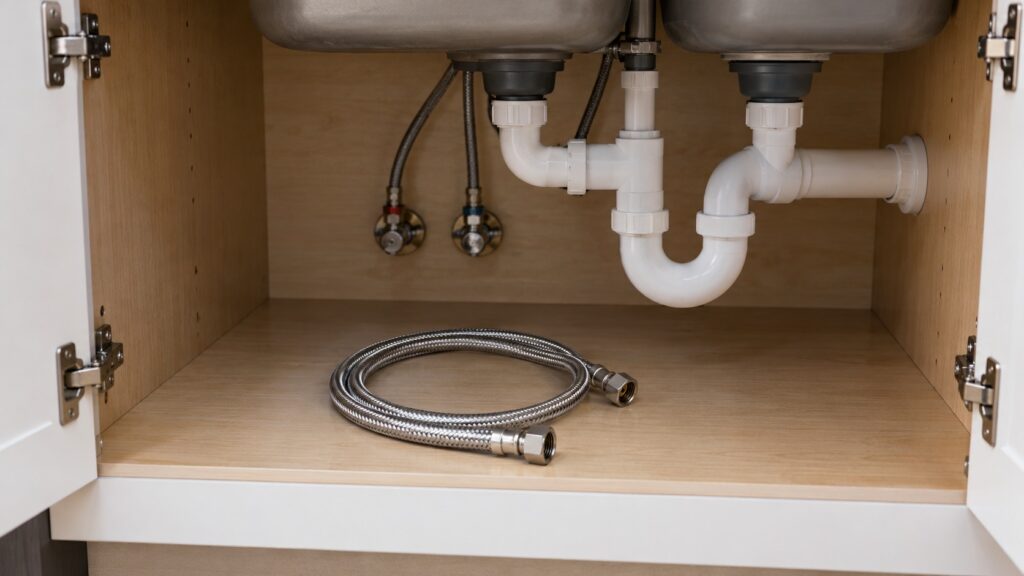
Let the line follow a gentle curve from the shutoff to the dishwasher. A sharp bend or a kink limits the flow and can cause the dishwasher to fill slowly or not at all, which is what a fill code such as F6E1 describes in our F6E1 not filling guide. Keep the line clear of the drain hose, the power cord and the sharp edges of the cabinet cutout, and do not let it sit where the dishwasher will press on it when it is pushed back into place. Leave slack so the dishwasher can slide in and out for service without pulling on the connection.
Think about the order of work. Make the water connection first, then slide the dishwasher into place slowly while watching the line, and make sure nothing is pinched behind it. The cabinet underneath is the usual place for the shutoff and the connection, so clear the space and work with a light and a towel.
How do you connect it safely?
Turn off the water at the shutoff valve before you touch any fitting, and disconnect the dishwasher from power at the breaker if you will be near the electrical connection. Follow the instructions for the fitting type; do not guess at how tight it should be. A fitting that is too loose leaks, and one that is forced can crack, so snug according to the instructions and no more. Do not use tape or sealant unless the instructions call for it. If the shutoff valve is missing, stuck or leaking, or if the water line in the wall needs work, that is a plumber’s job.
Keep the electrical and the water jobs separate in your mind. The dishwasher’s power connection and any wiring are not part of the supply line, and if you are not comfortable with them, an electrician or a technician should do them. Never work on a connection with the water on.
How do you check for leaks?
Open the shutoff slowly and look at the connection. Dry the fittings with a paper towel, then watch for dampness as the line fills. Run the first cycle with the dishwasher in place and check the connection again during the fill and after the cycle. A dry paper towel held under the fitting shows even a slow drip. Our installation guide calls for a leak test on the first cycle, and recommends photographing each connection and the model label before you close everything up.
If you see water, close the shutoff, stop the cycle and fix the cause before you continue. If water reaches an outlet or electrical part, sparks appear or you smell burning, switch off the breaker at the panel while standing on a dry floor, and never pull a plug from a wet outlet. Slow fills, no fill and a dishwasher that does not start can follow from the supply, so see our dishwasher installation guide and our dishwasher will not drain guide for the drain side.
When should a professional take over?
Bring in a plumber when the shutoff valve or the wall connection is missing or damaged, and a technician when the dishwasher does not fill, leaks after a correct connection or shows a code. A pro can also finish the whole install if you would rather not do it. We are an independent repair company. See our Amana dishwasher repair or schedule a visit.