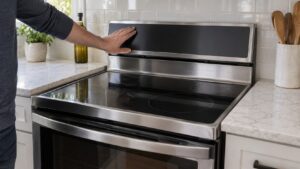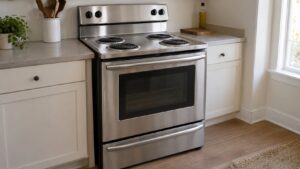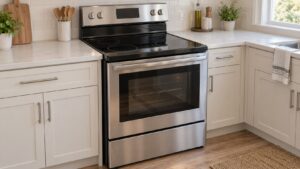
The amana range repair or replace decision turns on the part and the age — most ACR, AER, and AGR problems are cheap elements, igniters, and sensors that favor repair.
On any Amana range the electric oven side reports genuine F#E# codes on Easy Touch Electronic Controls — F1 through F9 with an E-suffix — while the gas cooktop has no code table at all, so a burner problem is always diagnosed by symptom; older single-character boards instead show F0 through FF, and a given range uses one scheme, not both. We start with the everyday causes you can check yourself, then explain the signs that point to a part that genuinely needs a hands-on repair.
What a amana range repair or replace usually means
On Amana ranges, this is usually traceable to a short list of causes rather than a dead control board. Working the steps below in order finds the problem fast and tells you when the job is genuinely a service call.
The repair-or-replace question rarely has a single right answer, because it depends on the specific part that failed, the age of the unit, and what a replacement would actually involve. A common, inexpensive part on an otherwise healthy Amana appliance almost always favors repair, while a major component on an aging unit can tip the other way. The guidance below sorts the situation into clear repair-leaning and replace-leaning signals so you can place your own case on that scale before spending anything.
Getting it right for the long run
One more factor deserves weight: the value of a confident diagnosis before you decide. Many appliances written off as dead turn out to need only a common, inexpensive part, while some that look like an easy fix hide a costlier underlying problem. An honest assessment of what actually failed, and what it would take to put right with genuine OEM parts, gives you a far better basis for the decision than the symptom alone. Amana built its name on dependable, value-focused appliances, so a unit that has otherwise served well often justifies a repair on cost grounds alone, and keeping a sound appliance out of landfill has its own value. Against that, weigh the age of the unit, whether replacement parts are still readily available, and whether a newer model would bring features you actually want. The point of this guide is not to push you one way or the other, but to give you a clear, honest framework so the decision fits your situation rather than a generic rule.
Whatever you decide, let a confirmed diagnosis lead rather than the symptom alone. The same outward sign can mean a cheap part or a costly one, and only a hands-on assessment tells the two apart. With that information you can place your specific situation on the repair-or-replace scale with confidence, and on a dependable, value-built Amana range the answer is more often repair than owners expect.
One last point worth keeping in mind: the way Amana designs these ranges rewards an owner who understands them. Amana built its reputation on dependable, value-focused appliances that do the essentials well without paying for extras, and that practical philosophy shows in how predictably they behave once you know the basics. When you can tell normal operation from a genuine problem, you avoid booking service over something that is working as designed, you describe a real problem accurately when one does appear, and you make better decisions about upkeep and about when a repair is truly warranted. The aim of this guide is exactly that: to give you the verified, honest understanding that turns guesswork into confident, sensible choices about your Amana range, whether that means a quick adjustment, a little routine care, or knowing the moment to call in an experienced technician.
Putting it together
Work the checks above in the order given. Most Amana range problems of this kind clear at one of the early, owner-checkable steps; the ones that do not point to a specific part and are worth a proper diagnosis rather than guesswork. Move from the simplest cause outward, confirm each step before the next, and treat a returning code or a lingering symptom as your cue to bring in help. A little routine care afterward prevents most repeat calls, since Amana builds these ranges to be dependable and easy to live with.
Related reading: Amana range repair cost, Amana range F1 error, and our range repair service.
Book Amana range service
If these steps do not resolve it, our experienced, independent technicians repair Amana ranges with genuine OEM parts and a 30-day labor warranty. Schedule a visit, see what our range repair service covers, or confirm your model details on the manufacturer’s site at amana.com.