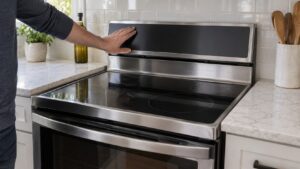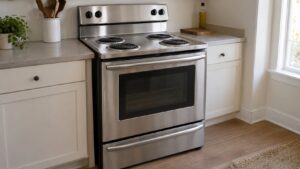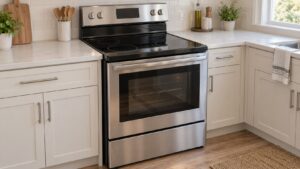
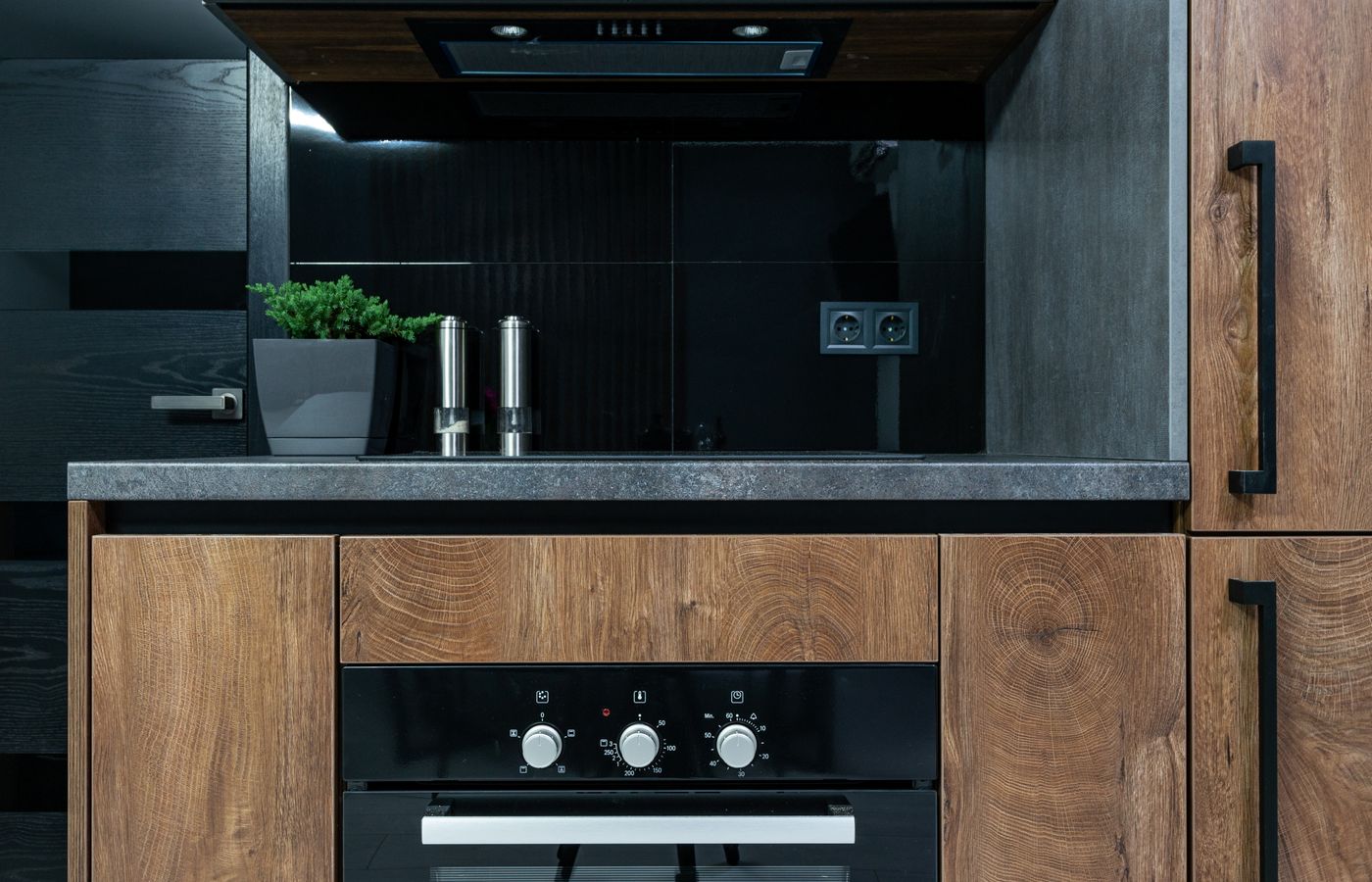
A few simple habits — captured in these amana range cooking tips — make an Amana range cook more evenly and last longer without any special equipment.
It helps to know how the appliance works. On an Amana range the electric oven and the cooktop are two separate systems. The oven uses bake and broil elements switched by the Easy Touch Electronic Control, which reads an oven temperature sensor and reports genuine F#E# error codes when something is wrong. The gas or radiant cooktop, by contrast, has no code table at all, so a burner or element failure is always diagnosed by symptom. Knowing which system a problem belongs to tells you immediately whether to look for a code or to work by observation.
Match the pan to the element
On a coil or smoothtop element, a pan that is too small wastes heat and leaves the exposed element to scorch spillovers; a pan that is far too large heats unevenly. Use a pan that roughly matches the element diameter, and choose flat-bottomed cookware so it makes full contact with a radiant smoothtop surface.
- Flat, heavy-bottomed pans heat evenly and protect a smoothtop from warping hot spots.
- Avoid dragging cast iron across glass — lift it to prevent scratches.
Preheat fully before baking
The oven temperature light or tone tells you the cavity reached the set point, but the racks and stone surfaces keep climbing for several more minutes. For baking, give the oven an extra five minutes after it signals ready so the whole cavity is stable. Putting food in too early is a leading cause of uneven browning that gets blamed on the oven.
Use the right rack position
Rack height changes results more than most cooks expect. The center rack suits most baking; a lower rack browns pizza and bread bases; an upper rack is for broiling and finishing tops. Crowding two pans on one rack blocks airflow and bakes unevenly — stagger them or rotate halfway through.
- Center: cakes, cookies, casseroles.
- Lower third: pizza, bread, anything that needs a crisp base.
- Upper: broiling and browning.
Keep the cooktop clean for even heat
On a radiant smoothtop, anything between the pan and the glass — a burned-on ring, a smear of sugar, a film of boil-over — interrupts heat transfer and creates the hot spots people blame on the element. Wipe spills once the surface has cooled, and use a cooktop cleaner rather than an abrasive pad that can dull or scratch the glass. On a coil or gas range, keep the burner ports and drip area clear so the flame or element draws evenly. A clean cooktop is not just cosmetic: it is the difference between a pan that heats across its whole base and one that scorches in one place while staying cool in another.
Habits that prevent service calls
Most problems that send people searching for a repair start small and build up quietly. A few minutes of regular attention prevents the majority of them: keep the appliance clean where residue and lint collect, check the seals and connections a couple of times a year, and act on the first sign of a change in performance rather than waiting for a hard failure. These habits cost nothing, extend the life of the appliance, and keep it running efficiently — and they make any eventual repair smaller, because a problem caught early rarely takes the rest of the system down with it.
When to call a technician
If the oven browns unevenly even with correct preheating and rack use, or the temperature drifts, the oven may need calibration or a new temperature sensor. A technician can confirm the sensor reading against an independent thermometer.
Quick reference
The short version of this guide:
- Match the pan to the element.
- Preheat fully before baking.
- Use the right rack position.
If a problem persists after trying these steps, an experienced Amana technician can diagnose it on site rather than leaving you to replace parts on a guess. Book a visit through our range repair service, look up a problem on our Amana error-code pages, or browse the full Amana guides library for more troubleshooting and maintenance help across every appliance we service.