Most advice about appliance energy use is about buying a new one. This is not that. These Amana energy saving tips are about the appliances already in your kitchen, and about the handful of habits and five-minute jobs that move the number — because a refrigerator with dirty condenser coils and a dryer venting through a blocked duct cost real money every day while looking perfectly healthy.
The refrigerator runs all year, so it dominates
Everything else in the kitchen runs in bursts. The refrigerator runs constantly, which means small inefficiencies compound in a way they do not elsewhere. Two of them are free to fix.
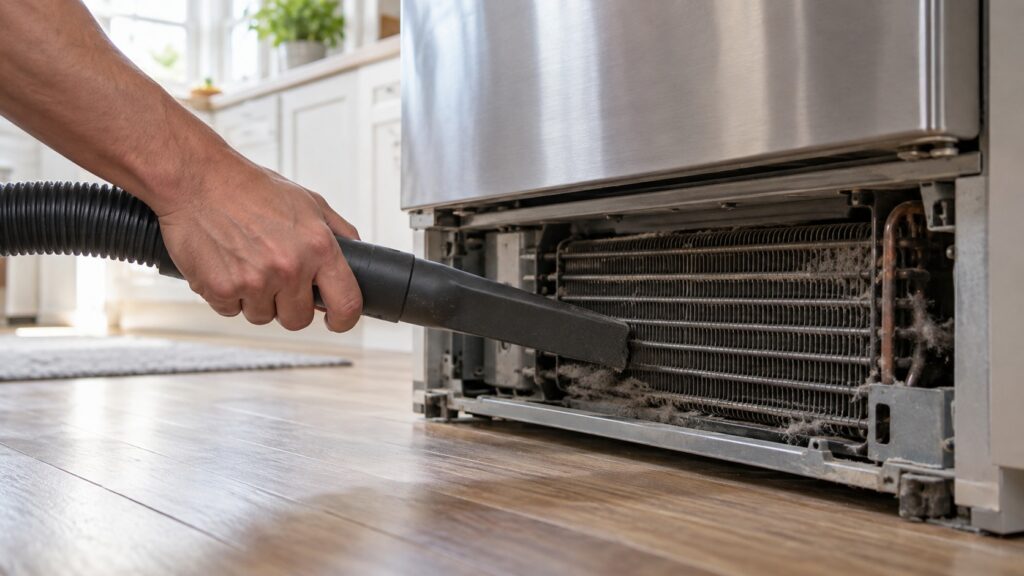
Condenser coils shed the heat the refrigerator removes from its interior, and coated in dust and pet hair they cannot. The compressor then runs longer for the same result, quietly, forever. Vacuum them twice a year — our guide on cleaning the condenser coils covers where they are. The second is the door seal: test it with a strip of paper at several points, and a seal that no longer grips is letting warm air in every minute of every day.
Temperature settings, and the myth of colder is better
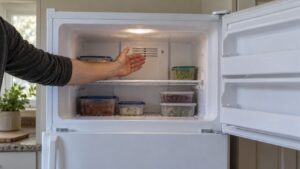
Setting a refrigerator several degrees colder than it needs costs energy continuously and buys very little. Food safety is achieved across a range rather than at a single point, and below that range you are paying to freeze the back of the lettuce. The same applies to the freezer: colder than necessary is not better preserved, it is just more expensive.
What does help is stability, and stability comes from a full-ish appliance rather than a cold setting. Thermal mass holds temperature through door openings; an empty refrigerator loses everything the moment the door opens and pays to recover it. Our organization guide covers the layout side.
The dryer is the expensive one
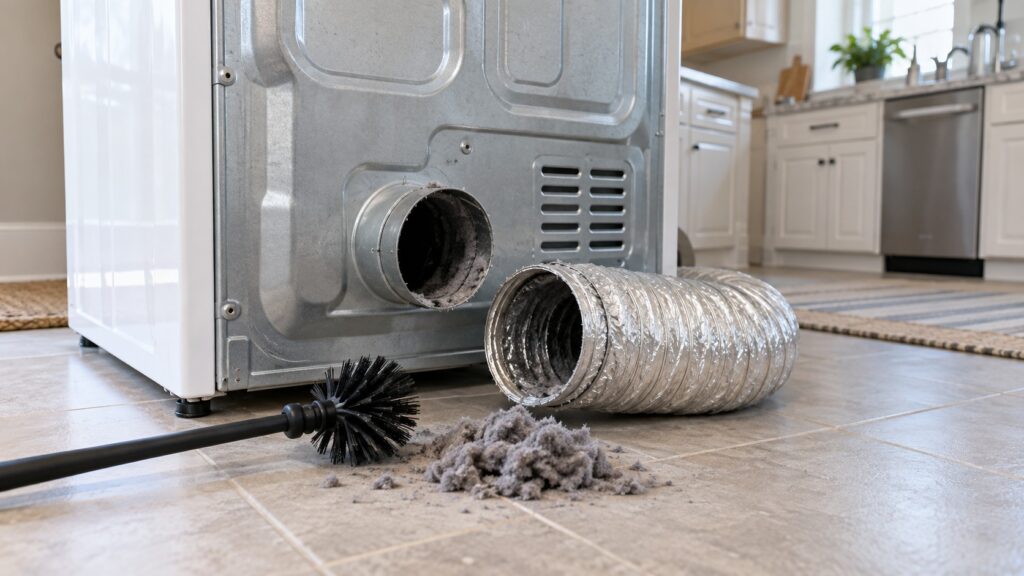
- Clear the vent from the machine to the wall cap. A restricted duct is the single most common cause of long cycles — see our vent cleaning guide.
- Clean the lint filter every load, and wash it when water pools on it instead of running through. Softener films the mesh invisibly.
- Spin harder in the washer. Every gallon removed mechanically is a gallon the dryer does not have to boil off.
- Do not over-dry. Sensor programs stop when the load is dry; timed programs keep going regardless.
- Dry loads back to back while the drum is still warm rather than letting it cool between them.
The dishwasher is cheaper than the sink
This surprises people. A modern dishwasher uses a few gallons for a full load; washing the same load by hand under a running tap uses several times that, and heats most of it. Rinsing every plate at the tap before loading therefore spends more water than the machine would have, and — on a machine with a soil sensor — tells it the load is clean so it runs a shorter wash than the dishes need.
Scrape, do not rinse. Run full loads rather than half ones. Use the eco program, which is longer and uses less, for anything not needed urgently. Our loading guide and the SoilSense explainer cover both points.
The oven, and the habits that waste it
Preheating longer than needed is the commonest waste — most ovens reach temperature well before the indicator suggests, and most baking is forgiving of a few degrees. Opening the door drops the cavity temperature sharply and the oven pays to recover it, so use the light and the window instead.
Batch cooking is where the real saving is: an oven already hot costs far less for a second dish than a cold one does for the first. And for a small item, a countertop appliance uses a fraction of what a full-size oven does for the same result.
Where the washer loses money
Heating water is almost the entire energy cost of a wash, so temperature is the lever. Modern detergents work well at cold for ordinary soil, and reserving warm and hot for genuinely dirty loads removes most of the cost without changing the result. Full loads beat half loads for the same reason a full refrigerator beats an empty one — the fixed cost of the cycle is spread further.
And use the highest spin the load can take. It is the one setting that saves money twice: once in the washer and again in the dryer. Our cycle guide covers matching program to load.
Siting, and the free saving nobody makes
Where an appliance stands changes what it costs to run, and it costs nothing to get right. A refrigerator beside an oven, against a sunlit window, or in an unconditioned garage in summer is fighting its surroundings every hour. Moving it is rarely practical, but shading a window, leaving the specified clearance at the back and top, and not stacking cereal boxes on top of it all are.
The same applies to the dryer. A dryer in a closed closet recirculates its own warm damp air and takes longer for every load; a louvered door or a vent in the closet fixes it. And a freezer in a cold garage in winter can actually stop working properly, because its thermostat reads the room and concludes nothing needs doing while the food inside slowly thaws.
When high bills mean a fault
A sudden jump rather than a gradual creep is worth investigating. A refrigerator that has started running constantly, a dryer whose cycles have doubled with a clean vent, or a freezer building frost are all reporting a problem rather than a habit — see a refrigerator running constantly and freezer frost buildup.
We are an independent repair company, not a factory service arm. Pricing starts from a diagnostic visit and we confirm the estimate before any work begins. Amana refrigerator repair covers the systems that drive most of a kitchen’s energy use, and you can schedule a visit online.