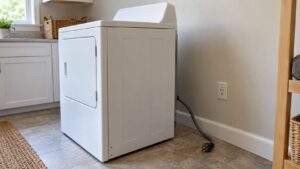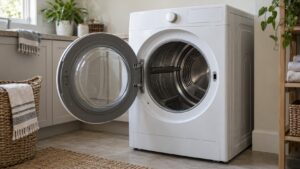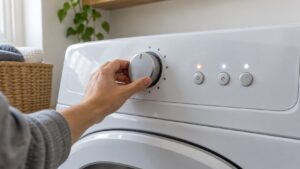
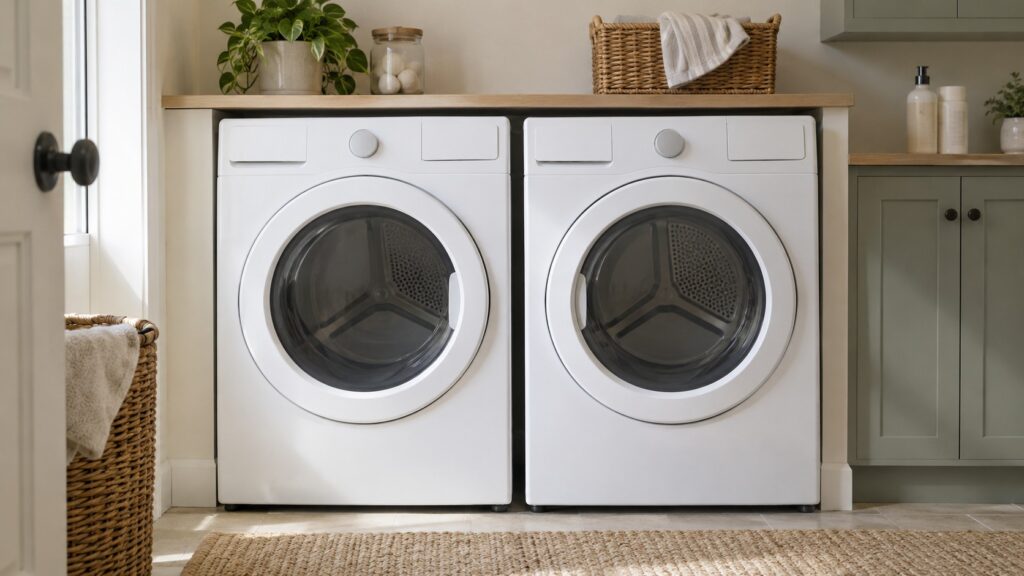
The Amana NED4655EW and NGD4655EW are the same white dryer in two fuel types: the NED is electric on a 240-volt supply, and the NGD is gas, listed for natural gas and LP convertible. Our model pages list both with Automatic Dryness Control, the AutoDry System, a Wrinkle Prevent option and multiple dry cycles and temperatures. The choice between them is mostly about which hookup your laundry room already has.
What is the difference between the Amana NED4655EW and NGD4655EW?
The fuel. Everything our pages list for the two is the same: the white finish, Automatic Dryness Control with the AutoDry System, the Wrinkle Prevent option and a choice of dry cycles and temperatures. The NED4655EW model page calls it an electric dryer on a 240-volt supply. The NGD4655EW page calls it a gas dryer for natural gas, with LP convertible noted. The letters N-E-D and N-G-D follow the pattern on our site, where NED means an electric dryer and NGD a gas one, but we do not decode the rest of the model number; the nameplate and the owner’s manual are the place for that.
People searching for these two often also look at the NED5800HW and NGD5800HW. Our pages list those with the same headline features, so for the exact difference between the 4655 and 5800 pairs, compare the owner’s manuals instead of guessing from the names.
Should you buy the electric or the gas version?
Start with the wall behind the dryer. Our Amana electric vs gas dryer guide sums it up: an electric NED needs a 240-volt outlet and costs less to buy, while a gas NGD needs a gas line plus a 120-volt outlet and a vent, costs a little more up front and often runs cheaper per load where gas rates are low. If your laundry room has only one of the two hookups, the decision is already made. Converting a room means an electrician or a gas fitter, and that cost belongs in your budget.
Neither is a ventless heat-pump dryer. Both need an exhaust vent to the outside, which is the next thing to check.
What does AutoDry do, and how well does it work?
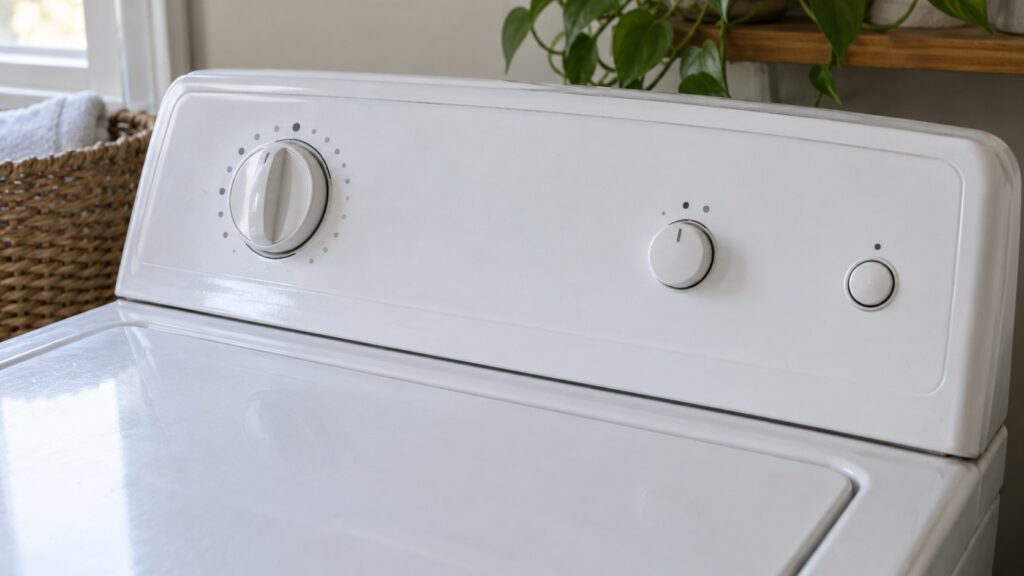
The AutoDry System with Automatic Dryness Control judges dryness electrically, not by a timer. Our moisture sensing guide describes two metal sensor bars in the drum that detect when clothes stop conducting moisture, then end the cycle. That saves energy and protects fabric, but a film on the bars or a clogged vent can make it stop early or run long. A few habits keep it accurate; the Amana AutoDry tips page covers cleaning the strips and loading the drum so clothes tumble past them.
The Wrinkle Prevent option is listed as an option on both pages. We do not have a verified description of exactly how long it runs or what it does on these models, so check the owner’s manual before you count on it.
Will the dryer fit and vent properly in your laundry room?
Measure the space, the path in and the vent. A dryer exhausts moist air through a duct, and our Amana dryer installation guide says a clean installation needs a short, smooth run of rigid or semi-rigid duct, never foil, with the right power cord for an electric unit or a gas line connected by a qualified installer for a gas one. A long, kinked or foil vent is behind most first-month drying complaints, because it chokes the airflow the dryer depends on. Measure the distance from the dryer to the outside wall and count the bends before you buy, because every elbow and every extra foot makes the dryer work harder to push air out.
Gas needs extra care. A gas connection must be made and checked by a qualified installer according to the manufacturer’s instructions, not by the owner. If you ever smell gas, do not touch switches or the dryer; leave the house and call the gas company or 911 from outside.
Finally, think about the day the dryer arrives. Check the path through doorways and stairs, make sure the floor is level and strong enough, and have the outlet or gas shutoff valve ready and accessible. Take the model number and the serial number from the nameplate and keep them with your receipt, since a technician will ask for both on any later visit.
What problems do these models bring to service?
On electronic models, the NED4655EW page says the codes we see are AF and F4E3 for restricted airflow, PF for a power failure, L2 for low voltage and the F3 sensor failures. It also lists older-style codes such as F30 for restricted airflow and F31 for low voltage. Mechanical-timer dryers have no display and are diagnosed by symptom: no heat, will not start, will not tumble, takes too long. The most common cause of poor drying, the page says, is a lint-clogged vent, not a part. Our dryer vent cleaning guide is the first stop, and the dryer takes too long page follows from it.
Whichever you pick, do not open a panel yourself: leave heating parts, wiring and the gas connection to a technician, and do not move a gas dryer on your own, because that can disturb the gas line. If you smell burning or see water near the outlet, switch off the breaker at the panel from a dry spot. Our dryer repair page explains the visit.
Is it worth repairing an older Amana dryer or buying new?
If you are shopping because your current Amana dryer is failing, weigh the repair against the price of a new unit. Our Amana dryer repair or replace guide covers the decision. An independent service company is not selling you a dryer, so a diagnosis can settle the question before you spend on either. You can book a visit and ask the technician to tell you honestly.