Picking the right program matters more than people think, so these amana washer cycle tips help you match the cycle to the load and keep the machine fresh.
It helps to know how the appliance works. An Amana high-efficiency washer uses far less water than older machines: it senses the load, doses water to match, and tumbles or agitates clothes through concentrated detergent before a high-speed spin extracts the water and a drain pump empties the tub. A suspension system keeps the spinning drum balanced. Because the water level is low, too much detergent oversuds and will not rinse away, and an unbalanced load makes the machine pause or walk — so technique matters as much as the cycle you pick.
Match the cycle to the load
Each cycle changes water level, agitation, and spin speed for a reason. Normal handles everyday cottons; Heavy Duty adds time and agitation for work clothes; Delicates lowers spin to protect fabric; Bulky suits bedding. Using one cycle for everything either under-cleans sturdy loads or beats up gentle ones.
- Normal / Casual: mixed everyday laundry.
- Heavy Duty: towels, work clothes, heavy soil.
- Delicates / Hand Wash: knits and fragile fabrics.
- Bulky / Bedding: comforters and large single items.
Use the right amount of HE detergent
Amana high-efficiency washers use little water, so too much detergent makes suds the machine cannot rinse away — which triggers a suds error and leaves residue. Use detergent marked HE and measure to the load size; more soap does not mean cleaner clothes.
Balance the load and air the drum
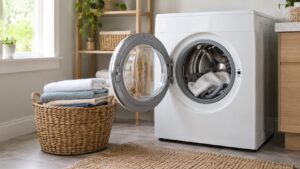
A single heavy item like a rug throws the drum off balance, so the washer “walks” or pauses to redistribute. Spread items around the drum and wash big single pieces with a few smaller ones. After the final load of the day, leave the door open so the drum dries and does not develop a musty smell.
Choose the right water temperature
Temperature does as much work as the cycle. Warm or hot water dissolves body oils and greasy stains that cold simply slides past, so towels, bedding, and heavily soiled work clothes come cleaner warm. Cold water, on the other hand, protects bright colors, prevents many stains from setting, and uses less energy, which makes it the right default for everyday mixed loads. Match the temperature to the soil, not out of habit: washing everything cold leaves grease behind, while washing everything hot fades colors and shrinks knits. Pairing the correct temperature with the correct cycle is what gets clothes clean in one pass instead of two.
Habits that prevent service calls
Most problems that send people searching for a repair start small and build up quietly. A few minutes of regular attention prevents the majority of them: keep the appliance clean where residue and lint collect, check the seals and connections a couple of times a year, and act on the first sign of a change in performance rather than waiting for a hard failure. These habits cost nothing, extend the life of the appliance, and keep it running efficiently — and they make any eventual repair smaller, because a problem caught early rarely takes the rest of the system down with it.
When to call a technician
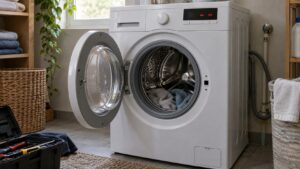
If the washer walks across the floor every cycle, will not drain or spin, or shows an F#E# code, the issue is mechanical rather than habit — a technician should check the suspension, pump, and balance system.
Quick reference
The short version of this guide:
- Match the cycle to the load.
- Use the right amount of HE detergent.
- Balance the load and air the drum.
If a problem persists after trying these steps, an experienced Amana technician can diagnose it on site rather than leaving you to replace parts on a guess. Book a visit through our washer repair service, look up a problem on our Amana error-code pages, or browse the full Amana guides library for more troubleshooting and maintenance help across every appliance we service.