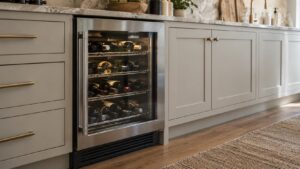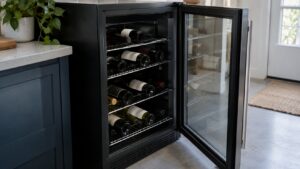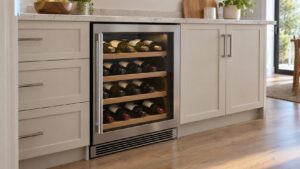
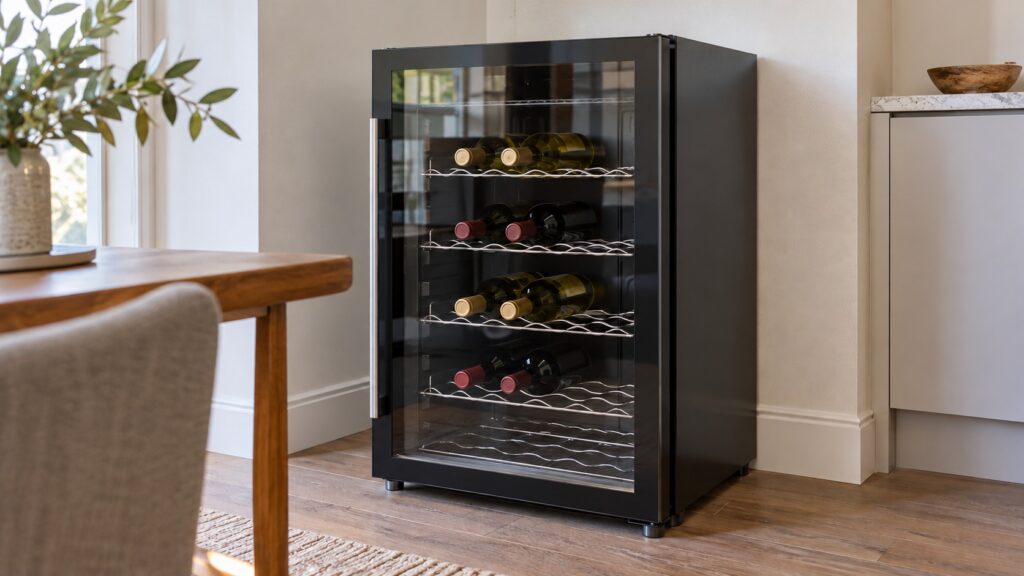
Amana wine cooler cleaning is simple, and it is the best fix for a musty or sour smell: empty the cooler, switch it off and unplug it, wash the inside with a mild solution, wipe the door seal, dry everything and let it air out before you load it again. Odors in a wine cooler usually come from damp, spilled wine, mold on labels or corks, or poor airflow around the cabinet, not from a broken cooling system. This guide explains how to clean the cabinet safely, how to find and remove the source of a smell, how to keep it away and when an odor is a sign that something else needs a technician. The Amana wine coolers on our site are the AMAW16S2MS, AMAW25S2MS and AMAW35S2CW, small single-zone units with a glass door and wire shelving, and the steps here apply to them in general; follow your owner’s manual where it differs.
How do you clean an Amana wine cooler?
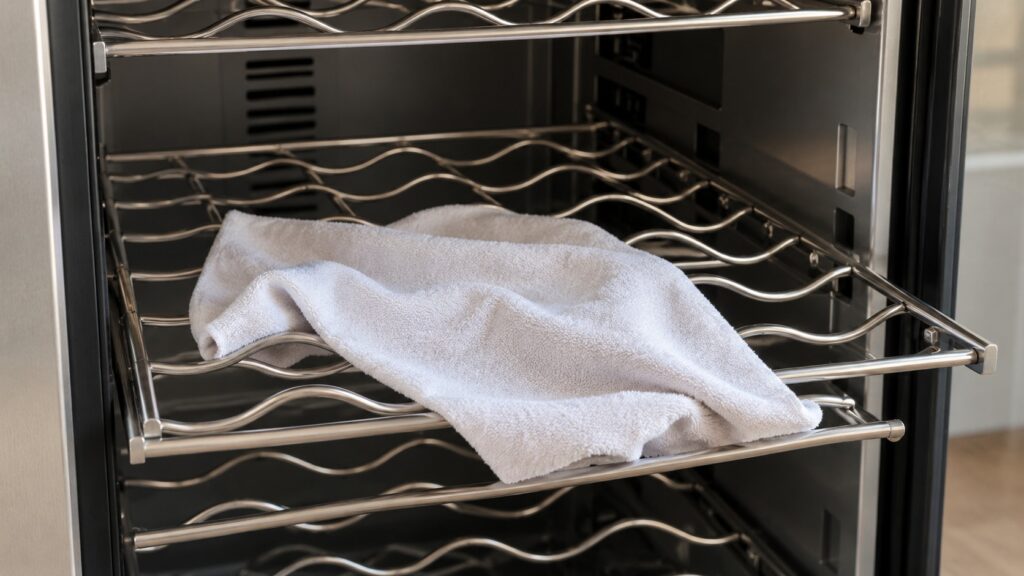
Start by taking out all the bottles and putting them somewhere cool and out of the light. Switch the cooler off and unplug it with dry hands. Let the inside come to room temperature so the surfaces are not cold and wet. Take out the shelves if your manual says they come out, and wash them in the sink with warm water and mild dish soap. Wipe the walls, the floor and the underside of the shelves with a soft cloth and warm water with a little mild soap; baking soda dissolved in warm water is a gentle alternative. Rinse the cloth and wipe again to remove the soap, and dry with a clean cloth.
Leave the glass door and the interior light fitting for last, and use a barely damp cloth around the light so moisture does not get into the fitting. Do not spray cleaner into the cabinet, because liquid can reach the controls and the light. Do not use strong chemicals or bleach, since their smell can linger and can be absorbed by corks and labels.
What causes a smell in a wine cooler?
The usual causes are simple. A bottle that leaked, or a spill that was never wiped up, ferments in the damp and smells sour. Labels and corks can mold if the cabinet stays damp. A cooler that has been switched off and closed for a while develops a stale smell. A cabinet with no room to breathe holds moisture instead of letting it dry out. Our wine cooler tips guide notes that a cooler boxed into a tight cabinet with no clearance cannot shed heat, and the same lack of airflow helps odors linger.
Look for the source before you clean: check the floor of the cabinet, the corners and under the shelves. Check the bottles too, especially older ones, for seepage around the cork. Wipe the source thoroughly, since masking a smell without removing the cause only delays its return.
How do you clean the door seal and the outside?
The soft seal around the door collects dust and spills. Wipe it with a damp cloth and mild soap, working along the seal, and dry it. A dirty seal can hold odors and may not close well. Wipe the outside with a soft cloth, and take care around the controls: use a barely damp cloth and dry them. If your model has a stainless trim, wipe with the grain and avoid abrasive pads.
The vent at the back or base lets the cooler shed heat. Per our wine cooler tips guide, keep the vent area clear of dust. You can brush or vacuum dust from the outside of the vent with a soft attachment, but do not remove any panel and do not reach into the cooling parts. If you need the inside of the unit cleaned, that is a technician’s job.
How do you keep the smell from coming back?
After cleaning, leave the door open for a while so the cabinet can dry, then plug the cooler in and let it come to its set point before you load it. Our tips guide advises giving a new cooler a full day to settle, and the same patience applies after a deep clean. Load bottles gently and do not overfill the cooler, since our guide notes an overpacked unit blocks the airflow it needs. Check bottles for leaks before you put them in, and wipe spills as soon as you see them.
Keep the cooler away from strong-smelling items, and do not store food in it, because food odors transfer to labels and corks. Make sure it has the clearance your manual calls for, and check the seal and cabinet once or twice a year. Our wine cooler installation guide covers the placement points.
When is a smell a sign of a problem?
A smell that stays after a thorough cleaning, a burning or electrical smell, water pooling around the cooler or a cooler that stops cooling are different matters. If you smell burning or see sparks or smoke, switch off the breaker at the panel while standing on a dry floor, and never pull a plug from a wet outlet. Our wine cooler not cooling guide and how a wine cooler works help you tell a cooling fault from a smell problem, and our light and noise guide covers sounds you may notice while it is empty. We are an independent repair company. See our Amana wine cooler repair or schedule a visit.