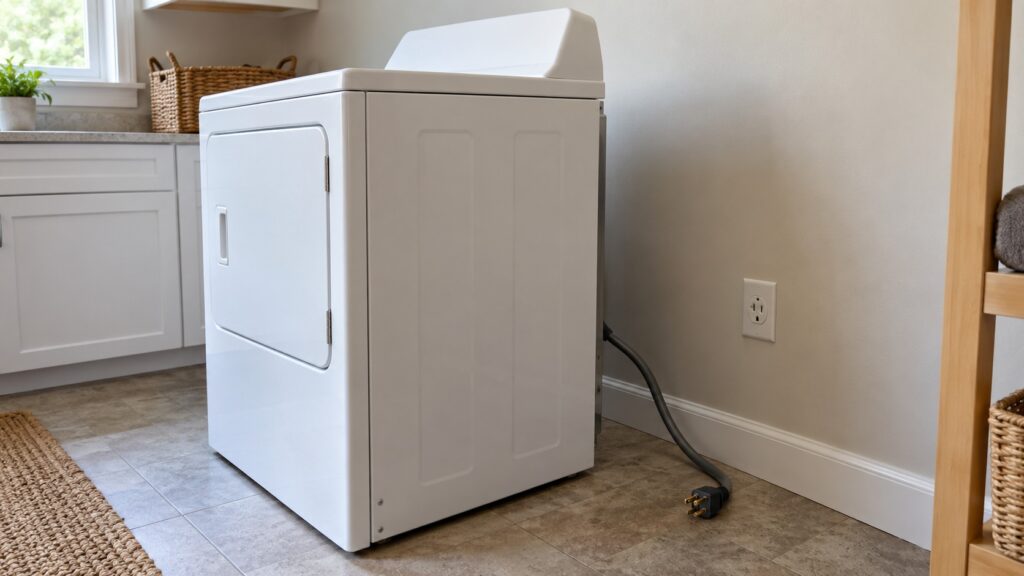
An electric Amana dryer, such as an NED model, needs the correct 240V power cord for the wall outlet, and our dryer installation guide says that means a 3-prong or 4-prong cord that matches the outlet. Fitting an Amana dryer 4 prong cord to the dryer means connecting it to the terminals inside the back of the cabinet, and that is work for a qualified installer or electrician, not a do-it-yourself job. What you can do safely is check the outlet and the cord, plan the connection and ask the right questions.
Which Amana dryers need a 240V cord?
Our Amana dryer installation guide says an electric NED dryer needs the correct 240V cord for the outlet, while a gas NGD dryer needs a leak-tested gas line. Our electric versus gas guide adds that a gas dryer also needs a 120V outlet and that both types need a vent. So the cord question is mainly about electric dryers. If you own a gas dryer, the power cord is a standard household plug, and the gas connection is a separate job for a qualified installer.
Not sure which you have? Look at the label inside the door or on the back of the cabinet for the model number. Our Amana electric vs gas dryer guide explains the difference.
What is the difference between a 3-prong and a 4-prong cord?
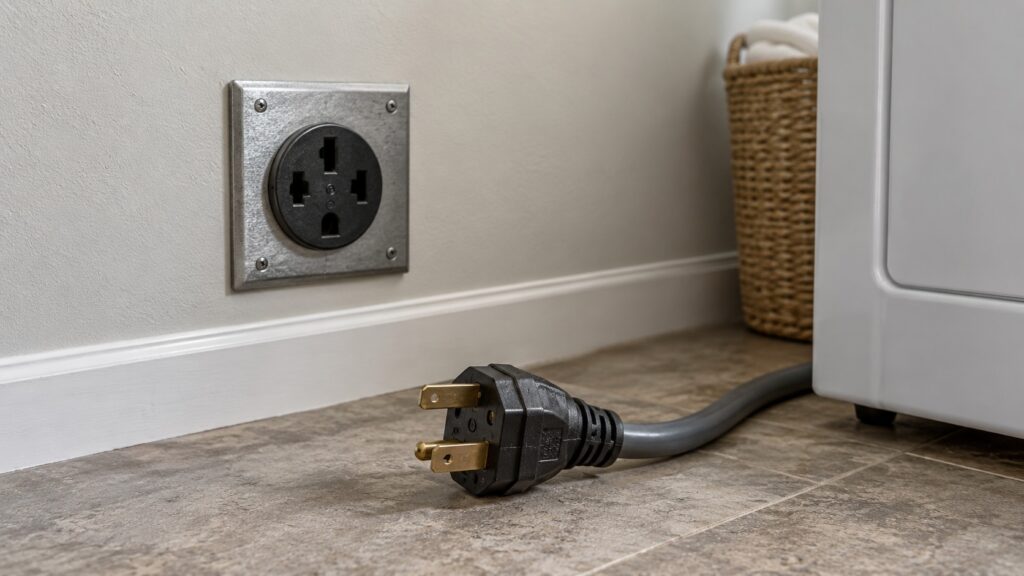
The number of prongs on the cord must match the number of slots in the wall outlet, which is why our installation guide says to match the cord to the outlet. A 4-prong arrangement includes a separate ground path, while an older 3-prong arrangement is a different design. Which one is correct for your home depends on the outlet that is in your wall and on local electrical code, so we do not tell you which to pick. The installer and your owner’s manual do.
The key point is that you do not change the match yourself. Do not swap a plug for another type, do not use an adapter to make a cord fit an outlet and do not remove the ground prong. If the cord and the outlet do not match, an electrician needs to look at it.
Why is connecting the cord not a DIY job?
The cord attaches to a terminal block on the back of the dryer, and that block carries household 240V power. A loose, crossed or incorrectly grounded connection can overheat, trip breakers or give someone a shock. Neither the model pages nor our guides give steps for owners to make this connection, and we will not invent them. A qualified installer or electrician connects the cord, checks the outlet and confirms that everything is secure and grounded before the dryer is used.
If you are replacing a dryer that already had a cord, do not assume the old cord suits the new machine. Our guide says to match the cord to the outlet, and an installer can confirm both. If your dryer was delivered without a cord, the installer will supply or specify the right one.
What can you check yourself before the installer arrives?
- Look at the face of the wall outlet and note how many slots it has, without touching inside it.
- Check that the outlet is not cracked, scorched, loose in the wall or warm to the touch. If it is, do not use it and call an electrician.
- Check the breaker panel for a labeled double breaker for the dryer. Do not move breakers other than to switch one off in an emergency.
- Look at any cord already on the dryer. Cracks, cuts, exposed wire or a melted plug mean it must not be used.
- Measure the space so the dryer can sit with room for the cord and vent behind it. Our Amana dryer installation guide covers the vent and the first run.
- Photograph the model and serial label, as our guide suggests, before the dryer is pushed into place.
What should you ask the installer?
Ask which cord your outlet needs, whether the outlet and breaker are suitable, how the cord will be connected and secured, and whether the dryer will be tested after the connection. Ask them to confirm the vent run as well, since our installation guide says a poor vent is behind most first-month drying complaints. Keep the installation paperwork and the owner’s manual together so a later service visit goes faster.
What problems can a wrong cord or outlet cause?
A dryer that is wired incorrectly or fed by a weak connection may not heat, may heat poorly or may show an error. Our Amana dryer L2 page covers the code that points at the power supply. Do not try to fix a supply problem yourself. If the dryer runs but does not heat, or the cord or plug is hot after a cycle, stop using it. If you smell burning or see scorching, switch off the breaker at the panel while standing on a dry floor and do not pull a plug from a wet outlet. See Amana dryer not heating for the symptom side.
On a gas model, if you ever smell gas, do not turn anything on or off; go outside and call your gas utility or 911 from outside.
When should you call for help?
Call before you plug in if the outlet and cord do not match, if anything looks damaged, or if you are unsure what a part is. Call after installation if the dryer will not start, does not heat or trips the breaker. Our Amana dryer repair page explains how a visit works.