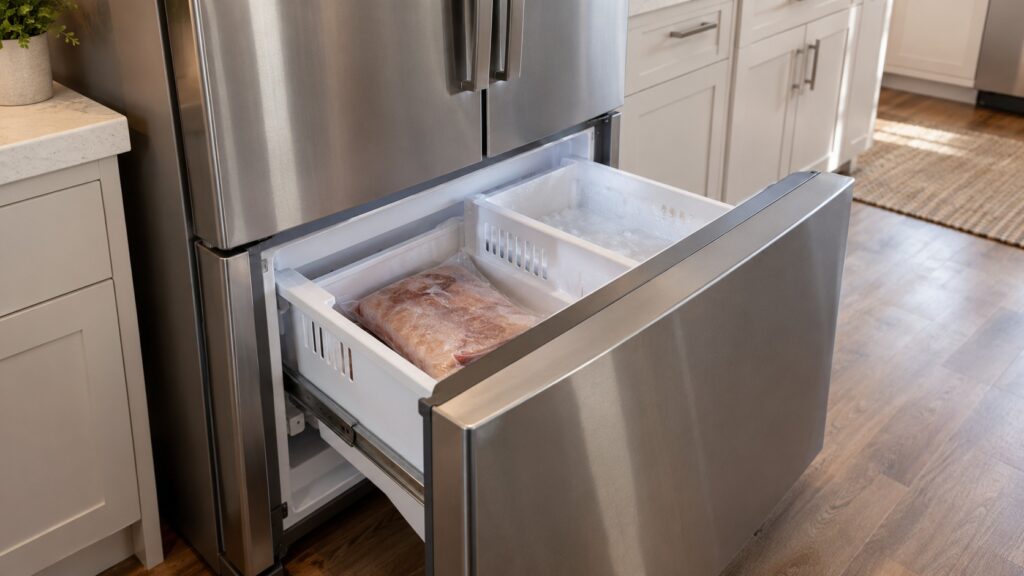
When an Amana bottom freezer is too warm while the refrigerator section above it stays cold, the cold air is not reaching or staying in the freezer drawer. The usual suspects are a drawer that is not closing or sealing, vents blocked by packed food, a setting that is too warm, frost choking the airflow or a part in the cooling path, such as the evaporator fan, the air damper or the defrost system. Start with the checks you can do safely yourself, and call a technician if the freezer stays warm after them.
Why is my Amana bottom freezer too warm?
The model pages describe the ABB series as bottom-freezer refrigerators with an EasyFreezer pull-out drawer and electronic temperature controls, and they say the repairs we are called for most include running too warm, frost buildup and the freezer staying cold while the fresh-food side warms. A freezer that is too warm but sits under a cold refrigerator section is a variant of those problems. Because the display only shows the PO alert and the Door Ajar icon, there is no code to read, and you diagnose by what you see, hear and measure. Our Amana EasyFreezer guide explains the pull-out drawer layout.
How do you know the freezer is really too warm?
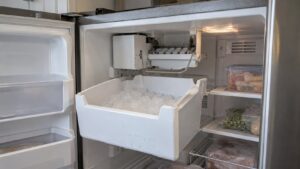
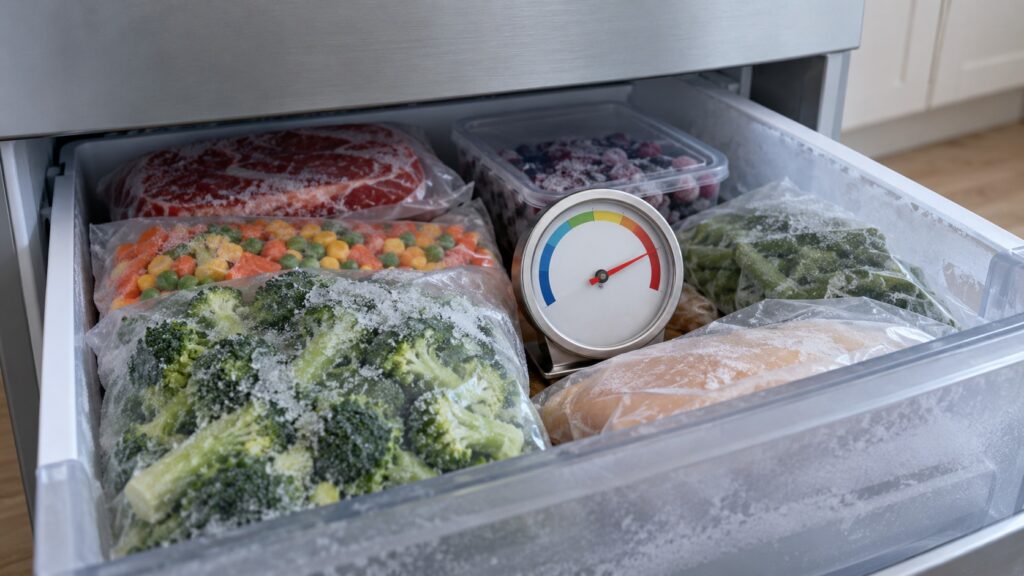
Do not rely on a feeling. Put an appliance thermometer in the freezer drawer, in the middle of the food, and read it after the freezer has been left closed to settle. The usual target for a freezer is 0 degrees F, and your owner’s manual lists the setting range for your control, which may not go as cold as some readings people search for. Soft ice cream, ice cubes that fuse together and frost crystals on frozen food are signs the freezer is warmer than it should be. If food has thawed, follow FDA food safety guidance and discard what is not safe.
What should you check first?
- Is the drawer fully closed? A pull-out drawer that is overfilled, or held open by a box or a bag, will not seal. Push it shut and watch that it closes flush. Our refrigerator door not closing guide covers the checks for a door or drawer that will not stay shut, and the gasket should be clean and unbroken.
- Is the freezer overloaded or were warm items added? A large load of room-temperature food makes the freezer work hard for hours.
- Are the vents blocked? Cold air moves through openings inside the cabinet. Keep food away from them so air can circulate.
- Are the controls right? Check the freezer setting on the electronic control and make sure no one has turned it up. Give the freezer time to settle after any change, as the manual describes, before you judge it.
- Has the room become hot? A refrigerator in a hot garage or next to an oven works harder to hold temperature.
Could frost or the defrost system be the cause?
Yes. The site’s guides describe an Amana refrigerator with a single evaporator in the freezer, with a fan moving cold air through a damper into the fresh-food side, and a defrost circuit that melts frost from the evaporator now and then. If frost builds up because the defrost circuit fails, airflow is restricted and the cooling suffers. Look at the back wall and ceiling inside the freezer for a heavy layer of frost, and read our Amana refrigerator frost buildup guide and the defrost system guide. A thick layer of frost that returns soon after you defrost is a sign that something in the defrost circuit has failed. Water pooling in the fresh-food section can point to a clogged drain, which our defrost drain guide explains.
If you decide to defrost, unplug the refrigerator, move the food into coolers and leave the drawer open with towels around it until the ice melts on its own. Never chip at ice with a knife or use a heat gun or hair dryer near the interior parts.
What about the fan, the damper and the coils?
With the drawer closed and the compressor running, listen for the evaporator fan inside the freezer. A fan that is silent or noisy, a damper that is stuck or a restricted air path can leave one section warm. These are parts a technician tests. You can clean the condenser coils yourself, which helps the whole system: follow our condenser coil cleaning guide with the refrigerator unplugged. A compressor that runs without stopping is a related symptom covered in our running constantly guide.
What if a power outage came first?
After a power outage, the PO alert tells you power was lost. Keep the doors closed as much as you can while it recovers. Food safety guidance from the FDA says a closed refrigerator keeps food safe for about 4 hours, a full freezer for about 48 hours and a half-full freezer for about 24 hours, with the safe limit for refrigerated food at 40 degrees F. Throw out perishable food that has been above that for too long.
When should you call a technician?
Call if the freezer is still warm after these checks, if frost returns soon after a defrost, if the compressor never stops or never starts or if the refrigerator is warm as well. Do not take off rear or interior panels yourself, and do not poke at the sealed system. If the refrigerator hums loudly, smells of burning or has water near the plug, unplug it or switch off its breaker while standing on a dry floor and call us. Our Amana refrigerator repair page explains the visit, and the repair or replace guide helps if the refrigerator is old.