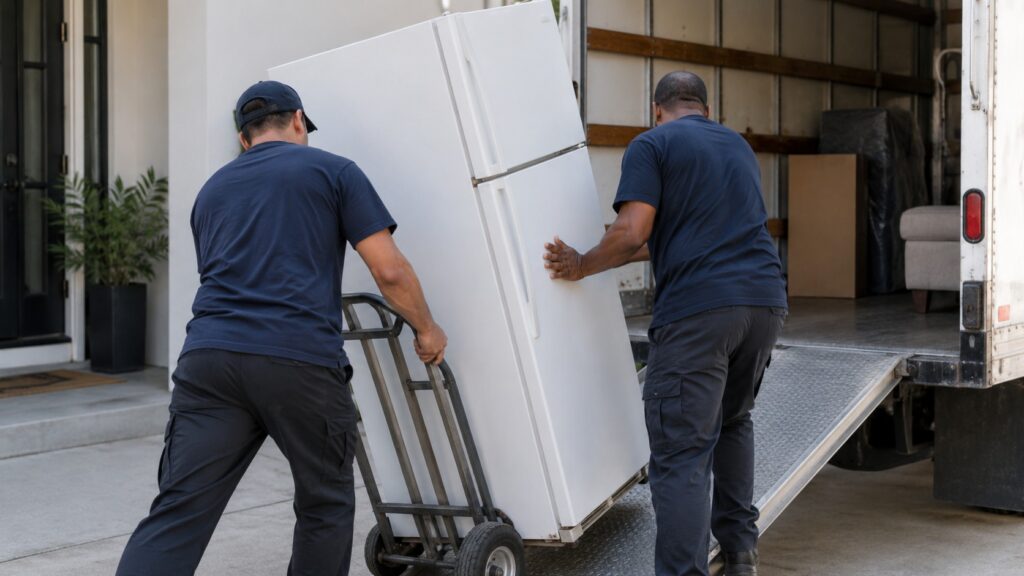
The Amana refrigerator moving tips that matter most are these: empty it and defrost any ice, turn off the water supply and drain the ice maker line, tape or strap the doors and shelves so nothing swings or slides, move it upright on an appliance dolly, and wait several hours before plugging it in at the new home. Done this way, your Amana top-freezer, bottom-freezer or side-by-side refrigerator arrives undamaged and cools normally within a day. This guide walks through the move in order, from the day before to the first night in the new kitchen.
How should you empty and defrost the refrigerator?
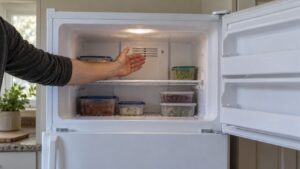
Plan to empty the refrigerator and freezer a day ahead. Use up perishable food, pack the rest in coolers with ice on moving day and discard anything past its date. Unplug the refrigerator and leave the doors open for several hours, or overnight, so any frost melts and drains. Place towels on the floor in front to catch water. Wipe the interior with a mild solution of baking soda and water, dry it thoroughly and leave the doors ajar so nothing smells on arrival. Take extra care with the defrost drain pan underneath, which may hold water that can spill during the move; our defrost drain guide explains why that water matters.
What do you do about the ice maker and water line?
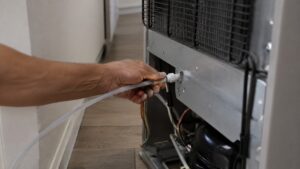
If your model has an ice maker or a water dispenser, turn off the ice maker, empty the bin and shut the water supply at the valve. Disconnect the water line carefully, with a bucket or towel under the fitting, and let any water in the tubing drain. Cap or tape the end of the line so nothing leaks onto the floor. Remove the water filter if the manual calls for it, and keep it in a bag; at the new home you will want to replace it. Our guide to replacing the Amana EveryDrop water filter covers the steps. A kinked or pinched line is a common cause of a dispenser that does not work after a move.
How do you secure doors, shelves and drawers?
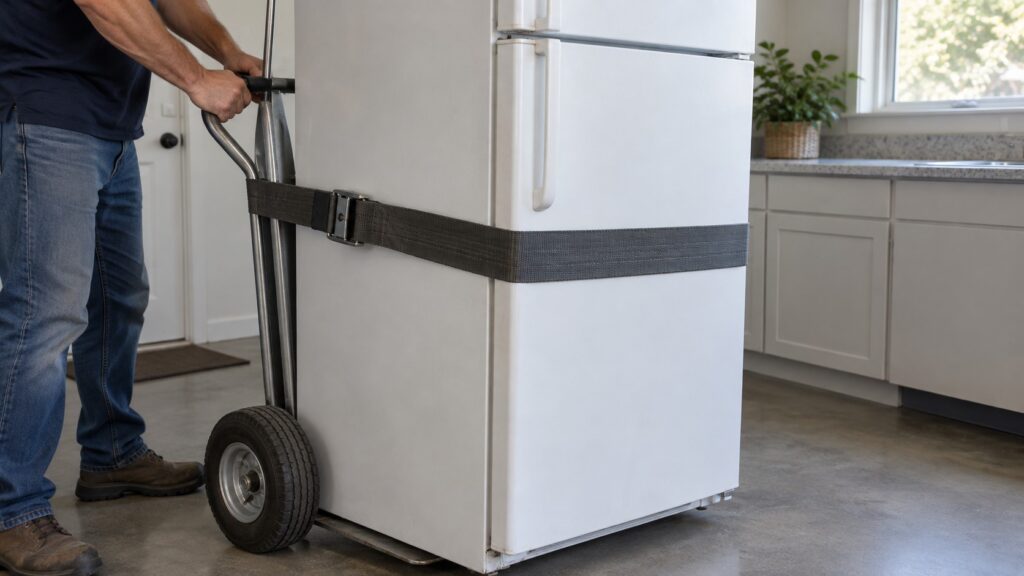
Remove loose glass shelves and crisper drawers, wrap them in blankets or bubble wrap and pack them separately. If you leave plastic shelves in place, tape them with painter’s tape, which does not damage the finish. Use straps or a moving blanket with straps around the whole refrigerator to hold the doors shut. Do not put strong tape directly on stainless steel or a painted door, because it can leave residue or lift the finish. Coil the power cord and tape it to the back so it does not drag. Remove the toe grille only if you need to, and keep the screws together in a labeled bag.
What about the food on moving day?
Pack frozen food together in coolers or insulated bags so it stays cold; a full cooler holds temperature far longer than a half-empty one. Fill the gaps with ice packs or newspaper. Keep dairy, meat and leftovers in a separate cooler with ice and move it in your own car rather than the truck, so you control the temperature. Throw away anything that has been above 40 degrees Fahrenheit for two hours or more. At the new home, put the cooler contents into the refrigerator only after it has reached a safe temperature, and use a thermometer rather than touch to decide. Plan the move so that the refrigerator is one of the last things to leave and one of the first to arrive.
How do you move the refrigerator itself?
Use an appliance dolly with a strap, and two people. Tilt the refrigerator back slightly onto the dolly from the side, keeping it as close to upright as possible. Moving a refrigerator on its side is risky, because oil from the compressor can run into the cooling lines; if you must lay it down, note which side and expect to wait much longer before plugging it in. Measure the doorways, hallways and stair turns ahead of time. If a door will not fit, the refrigerator doors can be removed by following the manual, which is easier than forcing the cabinet. Protect the floor with cardboard or a mat, and go slowly on stairs, with one person below to guide.
What do you do when you arrive?
Place the refrigerator in its spot, with space around it for airflow, and level it using the front feet so the doors close on their own and the cabinet does not rock. Reconnect the water line, check for leaks and turn the supply on slowly. Then wait: let it stand upright for several hours, longer if it traveled tilted, before you plug it in, so the oil settles back into the compressor. Once powered, set the temperature controls as the manual recommends and leave the doors closed. It takes many hours to reach cold temperatures, so do not restock until the interior is cold; a thermometer helps. Our Amana refrigerator installation guide covers placement and clearance in detail.
If the refrigerator does not cool after a day, work through our Amana refrigerator not cooling guide, and if water appears on the floor read refrigerator leaking water. Vacuuming the condenser coils at the new location helps it work well from day one; see how in the condenser coil cleaning guide.
We are an independent repair company, not a moving service, and we focus on repairs. If your refrigerator was damaged in transit or will not start up after the move, our Amana refrigerator repair service can diagnose it, and you can schedule a visit online.