An amana refrigerator not cooling properly is rarely a dead compressor first — on ART top-freezer, ABB bottom-freezer, and ASI side-by-side models the usual culprits are dirty condenser coils, a stalled evaporator fan, a defrost problem that has frosted the evaporator, or a door gasket letting cold air escape.
Amana refrigerators — top-freezer ART, bottom-freezer ABB, and side-by-side ASI — are diagnosed mostly by symptom, because the display carries only two consumer codes (the PO power-outage alert and the Door Ajar / Door Open icon); everything else, from cooling to ice, is traced to a real part rather than a code. We start with the everyday causes you can check yourself, then explain the signs that point to a part that genuinely needs a hands-on repair.
What a amana refrigerator not cooling usually means
These value-built refrigerators move cold air with an evaporator fan and rely on clean condenser coils to reject heat. A frosted evaporator from a failed defrost heater or thermostat, a fan that has stalled, coils packed with dust, or a flattened gasket all let the cabinet drift warm even on a colder setting. The Electronic Temperature Controls and the defrost circuit are tested before any sealed-system work is ever considered.
First checks you can do
Start with the checks you can safely do yourself. Each one rules out a common, inexpensive cause, and together they resolve the majority of cases without a service visit:
- Confirm the Electronic Temperature Controls are set cold enough and the unit is not in Cooling Off or Demo / Showroom mode — these are modes, not problems.
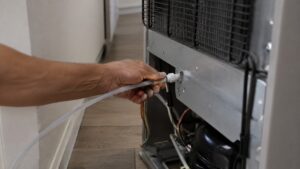
- Vacuum the condenser coils (behind or beneath the unit); dust-packed coils are the single most common cause.
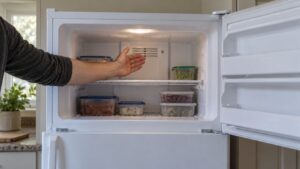
- Listen for the evaporator fan inside the freezer with the door switch held — silence points to a stalled fan.
- Inspect the door gasket for tears or flat spots, and make sure nothing blocks the air vents between sections.
Take these in order and confirm whether the problem has cleared before moving to the next. If you do end up needing help, having worked through them gives the technician a useful head start.
When it is a problem, not a habit
If the everyday checks above do not resolve it, the problem has likely moved from something you can adjust to a component that needs testing or replacing. These are the signs that point that way:
- Frost packs the freezer back wall — a failed defrost heater, defrost thermostat, or control needs testing.
- The compressor runs constantly yet nothing gets cold — a sealed-system or compressor failure that needs a hands-on diagnosis.
- The freezer is cold but the fresh-food side stays warm — a stalled evaporator fan or a blocked air damper.
At this point a proper diagnosis beats guesswork, since the remaining causes involve a specific part or electrical testing. An experienced technician can meter the suspect component and fit a genuine OEM part so the repair lasts.
Getting it right for the long run
If the basics here do not clear it, resist the urge to start swapping parts at random. The remaining causes usually involve a specific component that needs testing, and a confident diagnosis is what keeps the repair affordable and the appliance reliable afterward. A skilled technician can confirm the cause, fit a genuine OEM part, and stand behind the labor, which is a better outcome than guesswork. Knowing where the line falls between an easy self-fix and a real repair is the most useful thing to take from this guide.
Putting it together
Work the checks above in the order given. Most Amana refrigerator problems of this kind clear at one of the early, owner-checkable steps; the ones that do not point to a specific part and are worth a proper diagnosis rather than guesswork. Move from the simplest cause outward, confirm each step before the next, and treat a returning code or a lingering symptom as your cue to bring in help. A little routine care afterward prevents most repeat calls, since Amana builds these refrigerators to be dependable and easy to live with.
Related reading: Amana freezer cold but fridge warm, how to clean Amana condenser coils, and our refrigerator repair service.
Book Amana refrigerator service
If these steps do not resolve it, our experienced, independent technicians repair Amana refrigerators with genuine OEM parts and a 30-day labor warranty. Schedule a visit, see what our refrigerator repair service covers, or confirm your model details on the manufacturer’s site at amana.com.