These amana wine cooler tips cover the temperature, placement, and care that keep a wine cooler working well and your bottles at their best.
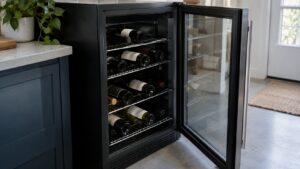
It helps to know how the appliance works. An Amana wine cooler holds a narrow, steady temperature using either a thermoelectric module or a small compressor system, rejecting heat through a vent at the back or base. Unlike a refrigerator it is tuned for gentle, stable cooling rather than deep cold, so stability and airflow matter most. If it is boxed into a tight cabinet with no clearance, it cannot shed heat and struggles to hold its set point — which is the most common reason a cooler “runs warm” with nothing actually broken.
Set steady serving temperatures
Wine keeps best at a constant, moderate temperature rather than a dramatic chill. Set the cooler for the wine you store most and resist constant adjustment — stability matters more than hitting an exact number. Reds generally show best slightly cooler than room temperature, whites cooler still.
- Reds: a cool cellar temperature, not warm.
- Whites and sparkling: cooler serving range.
Control vibration, light, and humidity
Constant vibration and bright light both age wine prematurely. Keep the cooler on a stable, level surface away from a busy walkway, and out of direct sunlight. Some humidity helps keep natural corks from drying, so store bottles on their sides if they are cork-sealed.
Give it room to vent
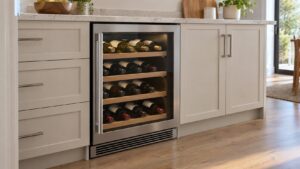
A wine cooler rejects heat through a vent, usually at the back or base. Crammed into a tight cabinet with no clearance, it runs hot and struggles to hold temperature. Follow the clearance the manual specifies and keep the vent area clear of dust.
Know your zones and load gently
If your cooler has two temperature zones, use them: store whites and sparkling in the cooler zone and reds in the warmer one rather than averaging everything to a single compromise temperature. Load bottles gently and avoid constant rearranging, since the vibration of frequent handling is one of the quiet ways wine ages before its time. Keep the unit reasonably full but not jammed, because a moderate number of bottles holds temperature steadily through door openings while an overpacked cooler blocks the internal airflow it needs. And give a new cooler a full day to settle at its set point before you judge whether it is cooling correctly — like any cooling appliance, it needs time to pull down and stabilize.
Habits that prevent service calls
Most problems that send people searching for a repair start small and build up quietly. A few minutes of regular attention prevents the majority of them: keep the appliance clean where residue and lint collect, check the seals and connections a couple of times a year, and act on the first sign of a change in performance rather than waiting for a hard failure. These habits cost nothing, extend the life of the appliance, and keep it running efficiently — and they make any eventual repair smaller, because a problem caught early rarely takes the rest of the system down with it.
When to call a technician
If the cooler will not reach its set temperature, runs warm, or makes unusual noise, the thermoelectric module or compressor system may be failing — a technician can confirm whether it is repairable.
Quick reference
The short version of this guide:
- Set steady serving temperatures.
- Control vibration, light, and humidity.
- Give it room to vent.
If a problem persists after trying these steps, an experienced Amana technician can diagnose it on site rather than leaving you to replace parts on a guess. Book a visit through our wine cooler repair service, look up a problem on our Amana error-code pages, or browse the full Amana guides library for more troubleshooting and maintenance help across every appliance we service.